
How to Walk a Calexico Street Search
A useful street directory search starts with the street address, not a guessed person. In Calexico, the Imperial County Assessor can turn a physical address into an APN and parcel map. The Clerk-Recorder can then connect that APN or a recorded name to deeds and other instruments. Historical directories, census schedules, and election sources add dated clues, but none of them is a complete list of everyone who has been present on a street. The county counters sit in El Centro, which is the county seat, while the city remains the local source for municipal permits, code files, and other city-held records.
Walk the trail in a fixed order so each later source has an address anchor and a date:
- Start with the address. Enter the physical address or APN in Imperial County ParcelQuest Lite. Save the APN, situs address, legal description if shown, and any parcel-map link.
- Confirm the parcel. Open the Assessor kiosk and use the Geo Viewer to see the target polygon. Zoom wide enough to note nearby APNs, but do not promise a buffer or identify tool that the public landing page does not document.
- Trace the recorded owner trail. Search the APN, document number, date, or indexed name in RecorderWorks. A current deed gives a grantor, grantee, document number, recording date, and legal description for the next step.
- Use election records within their purpose. My Voter Status is a self-check. County voter files are available only for the authorized purposes in Elections Code §2194, so they cannot be treated as a casual street roster.
- Add dated household evidence. Ask the library or an archive about the Imperial Valley directory years, census pages, Chronicle reports, and any street or criss-cross section. A historical entry is a time-stamped clue, not proof of a present address.
When the question shifts from a whole street to one named person, keep the address chain intact and compare at least two dated sources. The historical volumes and their reading cautions are treated more fully in the Calexico city directory collections.
Calexico Records Found by Address
Address records do not all describe the same relationship to land. ParcelQuest Lite is a property starting point. A Geo Viewer map shows shape and adjacency. RecorderWorks shows indexed instruments, which can include a deed, lien, map, notice, or financing document rather than a completed sale. City permit and code records may name an applicant, contractor, agent, or responsible party. Historical directories and census schedules show people in published years. Election records have their own access rules. This mix gives the address record chain depth, but it also makes careful labels essential. A Calexico street directory is therefore a chain of address records, not a single owner list.
| Record Set | Keeper | What It Shows | Access |
|---|---|---|---|
| Parcel and assessment data | Imperial County Assessor | APN, situs, basic characteristics, and a printable or downloadable parcel map | ParcelQuest Lite by APN or physical address; counter, phone, mail, email |
| Parcel geometry | Assessor Mapping/GIS | Parcel shape, nearby polygons, and map context | Geo Viewer through the Assessor kiosk; GIS phone fallback |
| Recorded instruments | Imperial County Clerk-Recorder | Indexed parties, document type, recording date, document number, and parcel when indexed | RecorderWorks index from January 2, 1986; older office indexes and deed books |
| Permits and code files | City of Calexico departments | Applicants, contractors, work, inspections, violations, and project dates when disclosable | Focused CPRA request by address, APN, permit number, or date |
| Election geography | Imperial County Elections | Precinct maps, district lines, statements of vote, and aggregate results | Public reports; voter-level access is purpose-limited |
| Dated household sources | NARA, libraries, and newspaper repositories | Published occupants, household members, addresses, and local events in a stated year | Directory, census, Chronicle, and map collections through their custodians |
The APN is the bridge between the map and the recorded document. The street name is useful for discovery, but the legal description, lot and block, subdivision, and cross streets are stronger continuity clues when a number changes. Mailing data can point to an owner’s correspondence address and still say nothing certain about who is present inside the parcel.
Calexico ParcelQuest Fields and Limits
ParcelQuest Lite is the county’s named public property search. Its official description confirms two search keys: an assessor parcel number and a physical address. The result is advertised for basic characteristics and parcel-map download or printing. The public description does not advertise an owner-name search, so a by-address search should never promise that a name alone will produce every parcel tied to it. A Calexico street directory should begin with the physical address, then preserve the parcel identity for RecorderWorks and any city request.
| Field or control | What to expect |
|---|---|
| Assessor Parcel Number | Use as a parcel search key. The official page does not state the required punctuation. |
| Physical Address | Use the street number and street name as the second confirmed search key. |
| Terms or disclaimer | The search leaves the official Assessor page for a ParcelQuest-hosted service after acceptance. |
| Owner name | Not advertised as a public search field in the county description. |
| Result and map controls | Basic property characteristics and a parcel plat map that can be downloaded or printed. |
The Assessor’s counter is at 940 W. Main Street, Suite 115, El Centro, California 92243. Walk-in, mail, phone, fax, and email channels are available Monday through Friday from 9 a.m. to 5 p.m. The general number is (442) 265-1300, the Mapping/GIS line is (442) 265-8609, the fax is (442) 265-8030, and assessor@co.imperial.ca.us is the published email. These channels matter when the online result is thin or a map needs staff review.
The Assessor contact details and counter information are shown on the official Calexico-area assessor contact page.
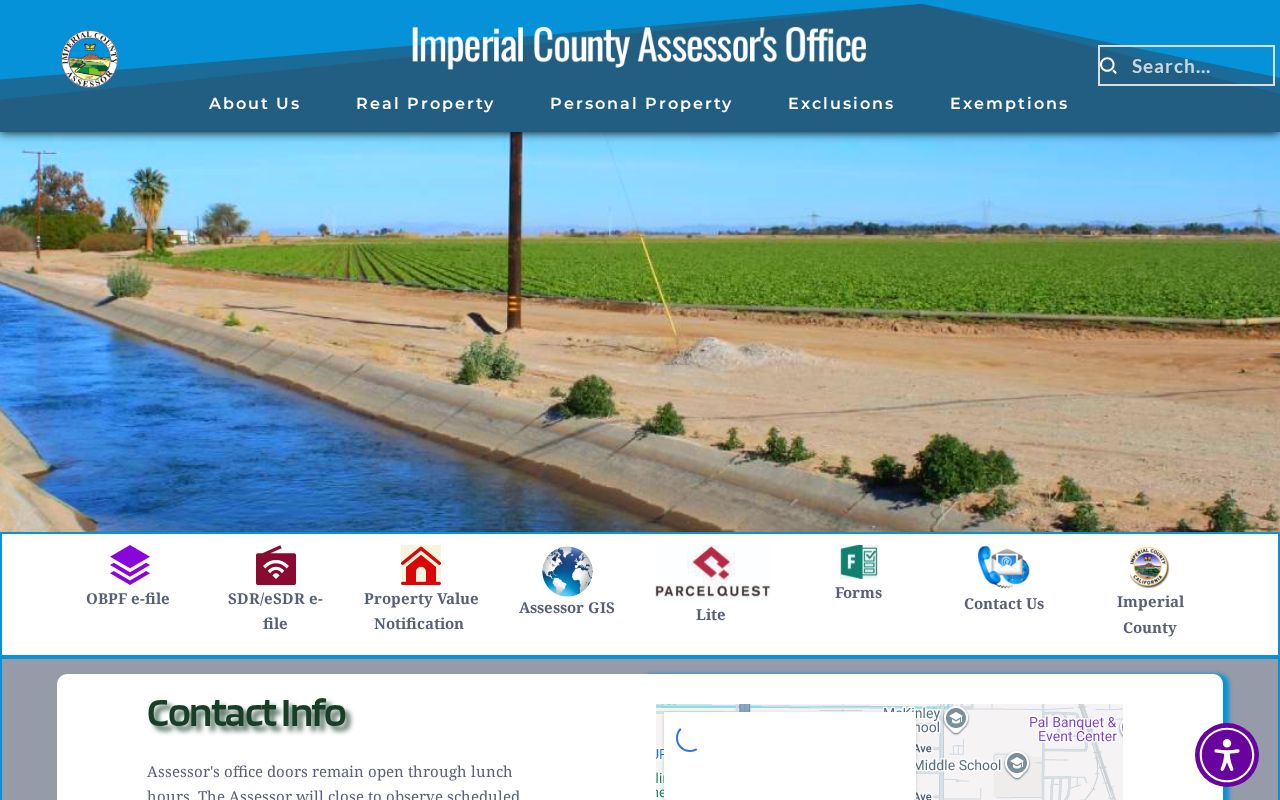
The contact image supports the same handoff: the online parcel search is only one door into the county assessment record.
Walk a Block in Calexico’s Geo Viewer
The Assessor kiosk leads to the Front Desk Application and Geo Viewer. For a street-by-street pass, locate the target address or APN, zoom until parcel polygons are clear, click the target, and write down its APN before checking nearby shapes. Then click the immediate north, south, east, and west parcels, plus parcels across the street when they are visible. The map is a navigation aid. The recorded document and assessment roll remain the sources that carry the legal record.
Exact layer names and identify, buffer, measure, or selection controls were not machine-readable from the kiosk landing page. Safe research therefore means promising map clicks and adjacent polygons, not a one-click radius list. Mapping/GIS can help with an unclear boundary at (442) 265-8609. The official Assessor kiosk and Geo Viewer entry point keeps the map work tied to Imperial County rather than to an unverified street database.
Note: The Geo Viewer landing page does not verify a radius tool or complete layer list, so map-click browsing is the safe promise.
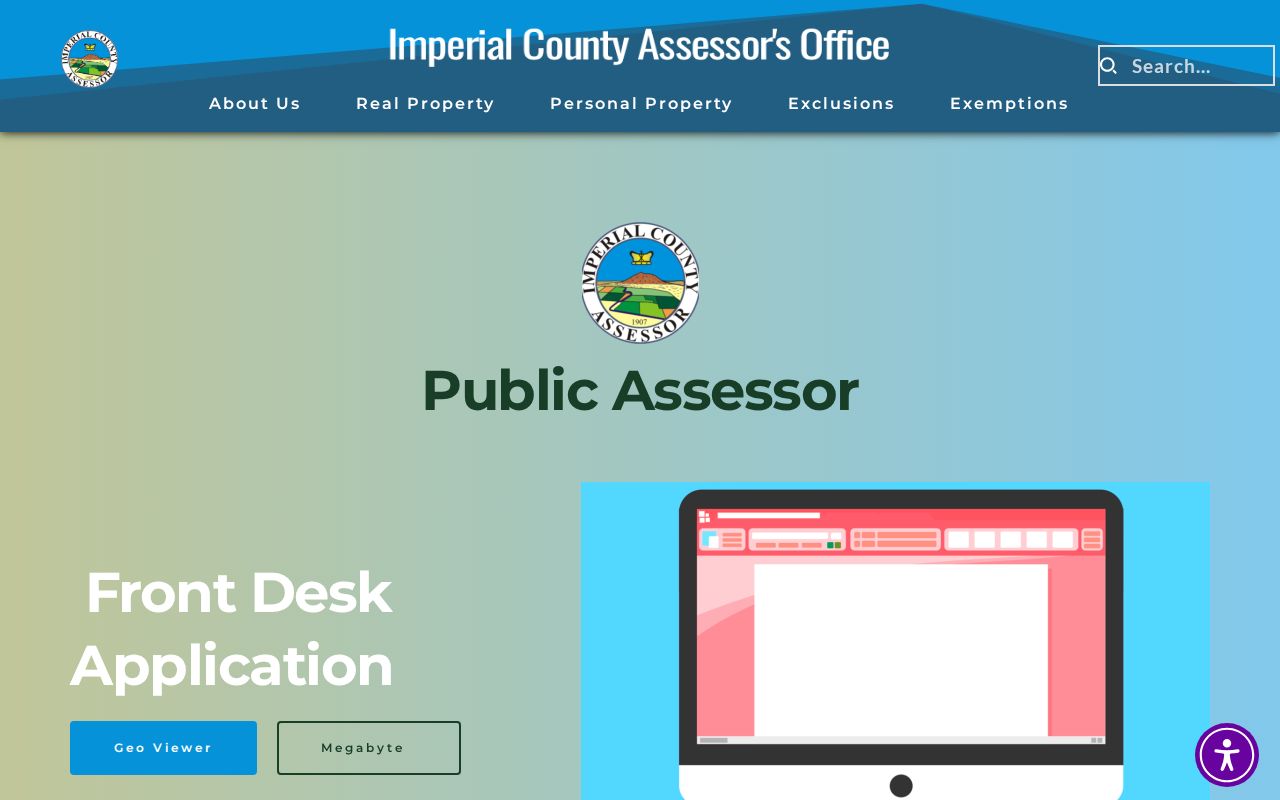
The kiosk image shows why a map click can widen a search from one address to a measured set of parcels without turning the map into a household roster.
Use the parcel’s situs address for physical location, the mailing address for tax correspondence, and the legal description for older land records. A plat is a recorded map that shows a subdivision or lot arrangement. A criss-cross directory reverses the usual name-first order by arranging a published area by street and number, when that section exists. These terms prevent a clean-looking map from being mistaken for proof of residence.
- Parcel
- A mapped piece of land identified by an APN and related legal description.
- Situs address
- The physical location assigned to the land, distinct from a tax mailing address.
- Plat
- A recorded or published map that lays out lots, blocks, streets, or parcel relationships.
- Criss-cross directory
- A dated reverse directory that may list a street and number first, then a published occupant or business.
RecorderWorks Along a Calexico Street
RecorderWorks is the main online deed and recorded-document index for Imperial County. Its public index runs from January 2, 1986 to the present. Search modes include Name, Document Number, Document Type with a recording-date range, Recording Date, Parcel Number, and Map. A name search uses the office’s LAST, FIRST pattern. A partial first name can narrow a common surname without requiring a full exact match, and the partial-match option can broaden spelling variants. For a Calexico street directory, this index is most useful after the APN or legal description is known. High-result searches should be narrowed by date, document type, or parcel.
| RecorderWorks mode | Street research use |
|---|---|
| Name | Find indexed people or businesses using surname-first syntax, then open a person’s linked documents. |
| Document Number | Retrieve a known instrument by entering the full number with its four-digit recording year. |
| Document Type and date | Limit deeds, liens, maps, notices, easements, or other instruments to a date range. |
| Recording Date | Find instruments recorded during a known period when a party name is uncertain. |
| Parcel Number | Follow instruments indexed to the APN that came from the assessor search. |
| Map | Search map classes such as an Assessor’s Map, Official Map, or Record of Survey Map. |
Open a document number to inspect its indexed details. Clicking a person’s name can group that indexed name’s documents by type and recording date. The index can reveal a deed of trust, reconveyance, quitclaim, lien, notice, map, or trustee-sale instrument, so a record hit is not automatically a sale or a residence. The Clerk-Recorder’s public counter at 940 Main Street, Suite 202, El Centro, offers free viewing and paid copies. The web cart can be printed and mailed with payment. Earlier instruments require the office’s older indexes and deed books.
Use the Imperial County RecorderWorks search for the online index, then verify any important conclusion with the custodian or a copy of the underlying instrument.
Calexico Permits and Code Files by Address
City records can add a project timeline that the assessment roll does not show. Planning entitlements, building permits, inspection histories, code-enforcement notices, business-license records, and public hearing notices may associate an applicant, owner, contractor, agent, or mailing address with a Calexico site. Those names describe responsibility for a filing or project. They do not prove that the named person lived at the address.
Official sources did not expose a searchable Calexico permit or code portal with a confirmed coverage range. Use the California Public Records Act, Government Code §§7920.000-7931.000, for an existing index or file. A focused request can name the street address, APN, permit number, project name, department, and inclusive dates. Ask separately for the permit index, permit card, application, final inspection, and certificate of occupancy because those parts may sit in different systems. The act does not require staff to create a new list or answer a person-based research question.
Imperial County Assessor
APN, situs, basic characteristics, and parcel maps.
(442) 265-1300
Clerk-Recorder
Recorded instruments, deeds, liens, maps, and older indexes.
(442) 265-1075
Imperial Elections
Self-status help, precinct maps, reports, and approved file requests.
(442) 265-1060
Under CPRA, an agency generally determines whether a request seeks disclosable records within ten calendar days and may extend that determination by fourteen days for unusual circumstances with written notice. Redactions and exemptions still apply. A Calexico address-record request should name the existing record or index sought rather than asking a clerk to assemble a complete street list from unrelated files.
Why Calexico Street Numbers Need a Bridge
No official source located for Calexico supplies a citywide street-renumbering year. Older maps and publications may use a former number, a different spelling, “avenue” instead of “street,” or a rural-route description. A failed name or address search is therefore not proof that a parcel or household was absent. The Calexico street directory needs an APN, legal description, lot and block, subdivision name, and cross streets kept together while moving backward.
Sanborn fire-insurance maps can help date the structure and compare street names, block numbers, footprints, and building use. They do not list ordinary occupants. The Library of Congress Sanborn map collection is a research route, while local libraries may hold other map sets. Compare the map index sheet with the detailed sheet, then compare both with a directory or newspaper notice. The official year set beyond 1910 needs verification before a precise map date is claimed.
For an older address entry that does not line up with a modern number, use the parcel identity first, then test the old number against legal description, map index, lot-block references, and cross streets. Do not force a modern address onto a historical source merely because the street name looks familiar.
The 1930 Calexico Street Snapshot
Calexico’s strongest verified historical directory run is regional rather than city-only. The National Archives identifies Imperial Valley directories that include Calexico for 1926, 1928, 1930, and 1933. The same volume covers Brawley, Calipatria, El Centro, Heber, Holtville, Imperial, Niland, Seeley, and Westmorland. That scope matters: an alphabetical entry may need a town marker, and a street section may move between communities inside one book.
Use each volume twice. First search the alphabetical residents or business section. Then inspect the geographic or street section if the actual volume includes one. Look for surname, spouse notation, occupation, address, householder marks, and local abbreviations in the front matter. The catalog title also describes a buyers’ guide and a complete classified business directory. Do not claim that every verified year has a reverse section until a page image is inspected.
Camarena Memorial Library is the local verification desk at 850 Encinas Avenue, Calexico, California 92231. Posted hours are Monday through Thursday from noon to 7 p.m. and Friday from 10 a.m. to 6 p.m.; it is closed on weekends. Call (760) 768-2170 or email library@calexico.ca.gov before traveling. Ask staff to check for Imperial Valley directories, telephone books, Chronicle material, yearbooks, and vertical files rather than assuming a named volume is on the shelf.
The NARA directory inventory establishes the years and geography. For newspaper gaps, the California Digital Newspaper Collection adds a dated search route. Neither source replaces inspection of the actual entry or proves that a person remained at the same address between editions.
Calexico Voter Data: Not a Street Roll
California’s My Voter Status tool is an authenticated self-service lookup. A voter can check registration, party preference, vote-by-mail or provisional-ballot status, polling location, and election information after supplying personal identifiers. It is not a public name-and-street search for someone else. Imperial County Elections can answer a person’s own status questions and publishes precinct maps, reports, and aggregate election results, but those public materials describe political geography rather than a list of households.
Elections Code §2194 and related regulations limit voter-file access to political, election, scholarly, journalistic, or governmental purposes as defined by law. An authorized requester must use the state or county application process, state a qualifying purpose, identify geography and fields, and secure the data. The voter file cannot be used as a casual street roster. Names, residence or mailing addresses, party preference, and registration history are treated differently from signatures, full birth dates, identification numbers, and protected addresses.
The county Elections office is at 940 W. Main Street, Suite 206, El Centro, California 92243-2839. Hours are Monday through Friday from 8 a.m. to 5 p.m., with the office closed from noon to 1 p.m. The main number is (442) 265-1060, the fax is (442) 265-1062, and TTD is (442) 265-1066. English and Spanish assistance is offered. Registrar Linsey Dale is listed at (442) 265-1074 and linseydale@co.imperial.ca.us.
The county’s election-data hub provides maps and reports through the Imperial County Elections site.
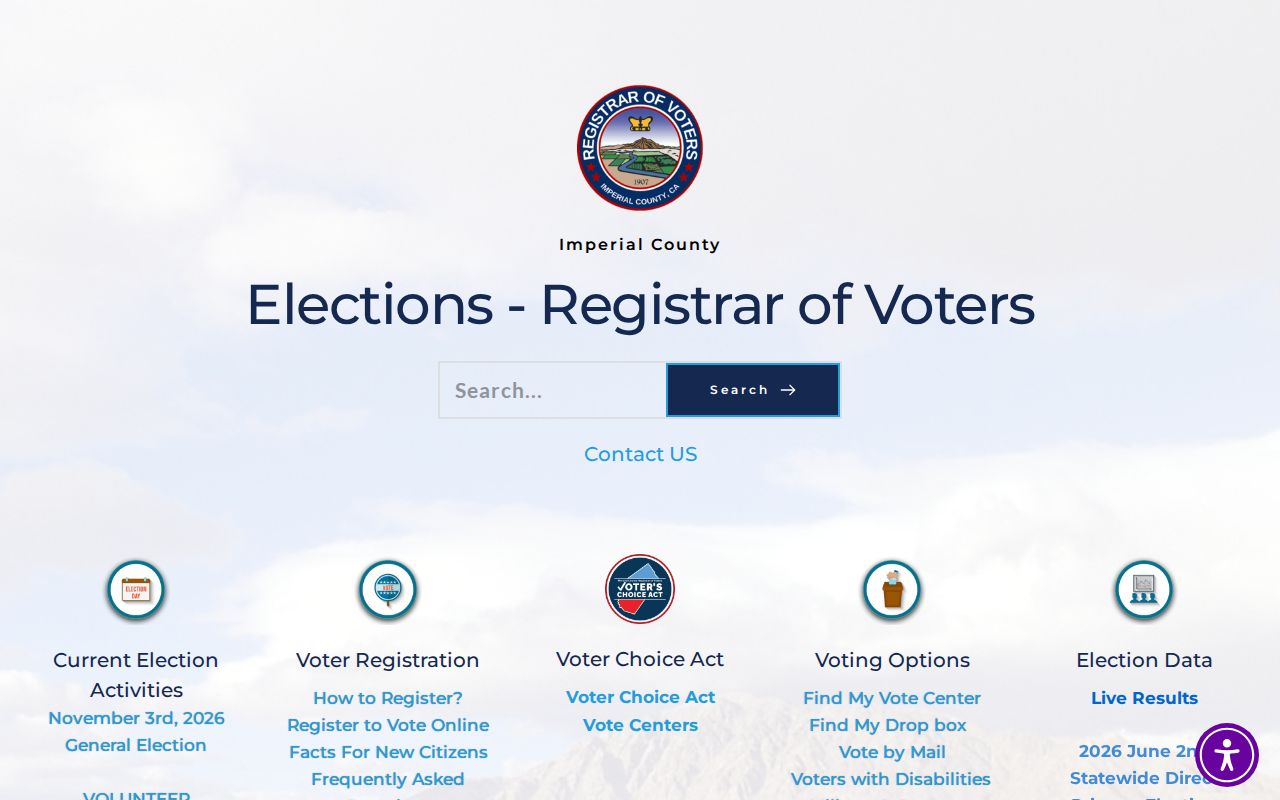
The election image belongs beside the access rule: public aggregate results can describe a precinct, while a voter-level street roster requires a lawful purpose and approved channel.
Contact details and voter-service hours are available from the Imperial County Elections contact page.
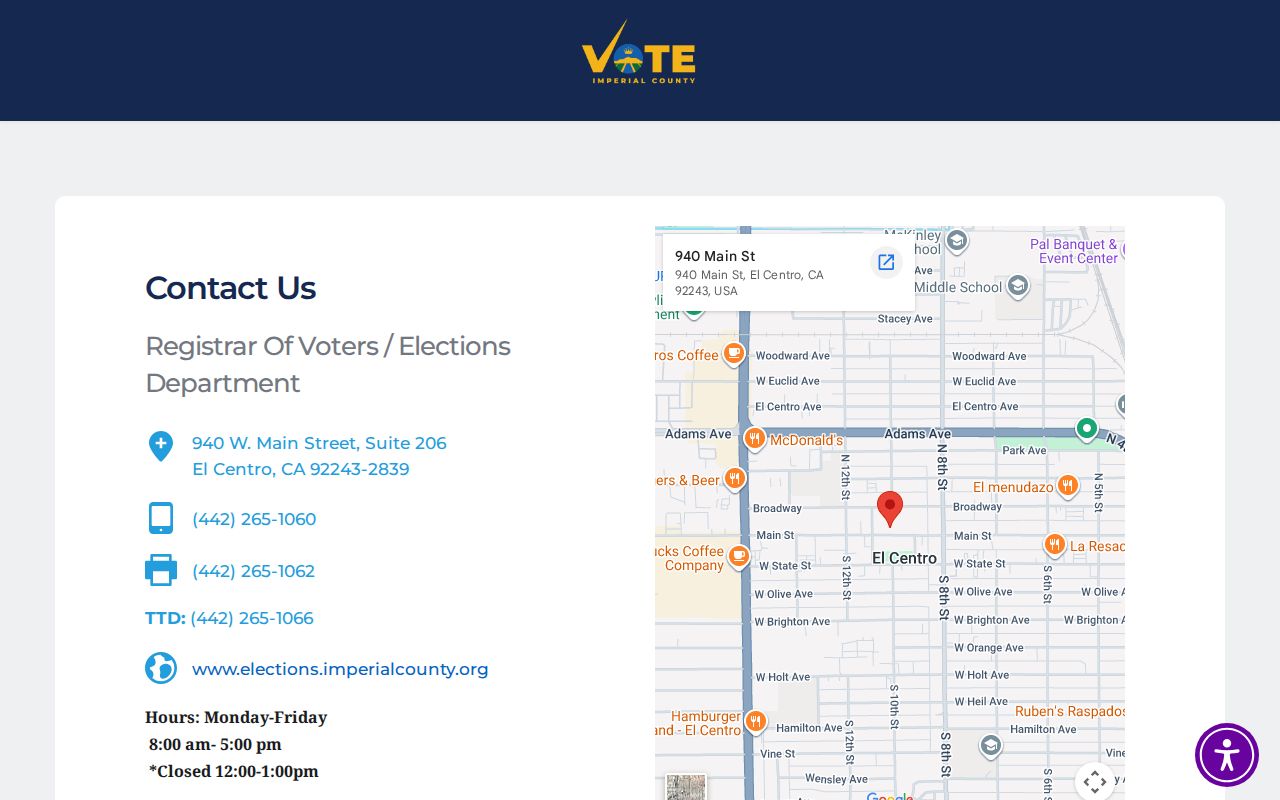
The contact image marks the proper place to ask about one’s own registration, an authorized file request, or a public map.
Note: An aggregate precinct map can describe a block without exposing the voter-level fields protected by California election rules.
What a Calexico Street Directory Leaves Out
A property record can identify an ownership interest, but an owner may use a different mailing address, hold title through a trust, manage another parcel, or have moved. A recorded party may be a lender, trustee, contractor, or creditor. A directory or census entry is a dated publication, and an election record reaches only people who are registered and lawfully visible through the relevant channel. Household members, visitors, and other non-owner occupants are not supplied by the parcel roll.
California DMV address information is restricted under the federal Driver’s Privacy Protection Act, and utility customer data is not an open household list. The 92231 mailing area can also extend beyond incorporated Calexico into rural or unincorporated Imperial County. Verify jurisdiction in the parcel map instead of treating a postal city as a city-limit line. The 92232 code is used for Calexico post-office boxes and cannot supply a residential block.
Lawful use. Calexico address and property records are appropriate for personal, lawful research such as family history, a house-history project, or civic review. Do not use a street directory to stalk, harass, threaten, impersonate, or intimidate another person; California law provides criminal and civil remedies for that conduct.
A sound Calexico address-record result states what a source shows, names its date and custodian, and leaves open what the source cannot establish. That discipline is more useful than a long list built from mismatched address fields.