
Calexico Previous Residents: Sources by Era
A house-history search works best when each source is assigned a time range and a role. Begin with the current APN and legal description, then choose the source that can answer the question for the period in doubt. Deeds show recorded interests. Directories and census schedules show dated households. Newspapers, court files, vital records, maps, and permits bridge events without turning one source into proof of every fact.
| Source | Years It Covers | Where Held | What It Shows |
|---|---|---|---|
| RecorderWorks index | January 2, 1986-present | Imperial County Clerk-Recorder online | Indexed grantors, grantees, types, dates, document numbers, and APNs when indexed |
| Earlier deed books and indexes | Imperial County from 1907 onward; exact earliest book unverified | Clerk-Recorder counter | Older conveyances, legal descriptions, and the pre-digital ownership chain |
| Imperial Valley directories | 1926, 1928, 1930, and 1933 verified | NARA and FamilySearch catalog | Dated names, addresses, businesses, and possible street-section entries |
| Federal census | 1910-1950 public schedules | NARA, 1950 Census site, and genealogy databases | Household members, relationships, ages, birthplaces, occupations, and enumeration clues |
| Calexico Chronicle | 1904-1998 title run | California Digital Newspaper Collection and other repositories | Obituaries, notices, marriages, school news, property ads, and local events |
| Sanborn fire-insurance maps | 1910 onward; later sheets need verification | Library of Congress and libraries | Building footprint, use, materials, block and street context, not ordinary occupants |
| City permits and code files | Exact start not located | Calexico departments and CPRA requests | Project parties, work, inspections, violations, and completion clues when disclosable |
| Federal court files | Coverage depends on the case and court | PACER and the Southern District of California | Dated parties, docket events, filings, counsel, and judgments where public |
Online access is not the same as full historical coverage. RecorderWorks reaches the modern index cutoff, while older books, library holdings, archive boxes, and counter searches require a different request. A previous-residents result is strongest when the parcel identity and date line up across at least two custodians.
APN First for Calexico Previous Residents
Use the physical address in ParcelQuest Lite, then save the APN and legal description before searching names. The Assessor confirms APN and physical-address searching, basic characteristics, and parcel-map download or printing. The public description does not advertise an owner-name search. This order matters because a street number can change, a parcel can split or combine, and a mailing address can point away from the land.
The situs address is the physical place. The mailing address is where assessment correspondence goes. The legal description identifies the land through a subdivision, lot and block, parcel, or other recorded description. An owner may use a trust, a manager, a post-office box, or another correspondence address. None of those fields alone proves who lived at the site.
When an older address does not match, preserve the APN, subdivision name, lot and block, cross streets, and map references. That parcel-first order gives a house-history search a stable land anchor. For a current chain, the Assessor is at 940 W. Main Street, Suite 115, El Centro, with walk-in, mail, phone, fax, and email access Monday through Friday from 9 a.m. to 5 p.m. The general number is (442) 265-1300, Mapping/GIS is (442) 265-8609, and assessor@co.imperial.ca.us is the published email. The Imperial County parcel search is the online starting point.
The current-address handoff is also useful when a full named street needs to be checked before moving backward. The Calexico street directory method keeps the parcel and address work in one chain rather than replacing it with a name-only guess.
Deed Steps for Calexico Previous Residents
RecorderWorks is a free Imperial County grantor-grantee index from January 2, 1986 to the present. It offers Name, Document Number, Document Type with date range, Recording Date, Parcel Number, and Map modes. Name searches use LAST, FIRST syntax, accept a business name, and offer partial matching. Add a partial given name or a date range when a common surname creates too many results.
Note: RecorderWorks begins January 2, 1986; an earlier owner requires the Clerk-Recorder’s counter indexes and deed books.
- Pull the current parcel. Record the APN, legal description, and the latest assessment clues from ParcelQuest Lite.
- Find the latest conveyance. Search RecorderWorks by APN or indexed party and note the document number, recording date, grantor, grantee, and legal description.
- Move from seller to earlier buyer. Search the seller as a grantee in an earlier instrument. Repeat the comparison with names, dates, parcel identity, and legal description.
- Separate instruments by purpose. A deed, quitclaim, deed of trust, reconveyance, lien, notice, map, or trustee-sale filing does not carry the same meaning as a completed transfer.
- Cross the online cutoff. When the chain reaches January 2, 1986, continue with the Clerk-Recorder’s older office indexes and deed books instead of treating the web cutoff as the start of land records.
- Grantor
- The party indexed as giving or transferring an interest in an instrument.
- Grantee
- The party indexed as receiving an interest or benefit in an instrument.
- Chain of title
- A linked sequence of recorded transfers and related instruments for the same land.
- Legal description
- The durable land description that can connect an older deed to a parcel when a street address shifts.
- Enumeration district
- A census collection unit whose boundary can help locate pages when an address is incomplete or names are mistranscribed.
The online index does not promise that every image is a free download. The Clerk-Recorder counter is at 940 Main Street, Suite 202, El Centro, and the web cart can be printed and mailed with payment. Copies cost money at the counter, while viewing at the counter is free. Verify current copy charges before ordering.
Use the RecorderWorks grantor-grantee search for the modern index, then ask the office for the older index route when the parcel chain predates it.
Calexico’s 1907 Records Boundary
Imperial County was created from eastern San Diego County in 1907, and Calexico was incorporated in 1908. A title chain that reaches before county formation may be a jurisdiction problem rather than a missing-record problem. Earlier land, probate, court, tax, and recorder material can require a San Diego County or predecessor-record search. Do not infer that an online Imperial index failure means the parcel had no prior owner.
Boundary clue. Calexico property history can cross a county line in time. Keep the legal description, tract, lot and block, and recording reference before moving a pre-1907 question to another custodian.
The county seat is El Centro, not Calexico. That explains why deed, assessment, court, election, and certificate access generally routes north to Imperial County offices even when the address is in the city. Local city records remain separate. This two-desk pattern is part of the evidence trail and should be recorded in research notes.
Four Directory Years for Calexico Previous Residents
NARA verifies an Imperial Valley directory that includes Calexico for 1926, 1928, 1930, and 1933. It is a regional book, not a Calexico-only annual. The volume covers Brawley, Calipatria, El Centro, Heber, Holtville, Imperial, Niland, Seeley, and Westmorland as well. A researcher should therefore check town markers, the alphabetical residents section, business pages, and any geographic or street section present in the actual volume.
The catalog description calls the work an Imperial Valley city directory with a buyers’ guide and a complete classified business directory. An entry may contain a surname-first name, spouse notation, occupation abbreviation, householder marks, and street address. Local shorthand belongs to the book’s front matter. Do not treat a likely field as verified until a page image is inspected. A missing name can reflect spelling, a move, rural delivery, a missed canvass, death, or publication scope.
The NARA Imperial Valley directory inventory proves the four years and regional coverage. FamilySearch has a catalog route for the same title, but viewing limits and digital availability vary by item and location.
Note: The four directory years are regional snapshots, so a town marker must be checked before a household is assigned to Calexico.
Pair the 1930 Calexico Directory and Census
The 1930 overlap is the best verified bridge between a regional directory and a federal household schedule. It can make earlier occupants easier to place at a stated time. Use the directory for an address, occupation clue, spouse notation, or business link. Use the census for household relationships, age, birthplace, occupation, and enumeration geography. Neither source is perfect. Their value grows when spelling, street context, and household structure agree.
- Write down the name, address, town marker, spouse, occupation, and every abbreviation from the 1926, 1928, 1930, and 1933 volumes.
- Open the 1930 census for the Calexico enumeration area and compare household members, ages, birthplaces, and address or page clues.
- Use the 1928 and 1933 entries to bracket a move, a new spouse, a changed occupation, or a household that disappears from one edition.
- Check the 1910, 1920, 1940, and 1950 schedules for a longer household timeline, then return to deeds and newspapers for property context.
The NARA 1950 Census search exposes Calexico enumeration geography, including a district description bounded by city limits, 4th Street, and Dool Avenue. Use that information to find the right pages, not to assume a current boundary. Search compound Spanish surnames under both components, with and without accents, and inspect page images when OCR is weak.
Calexico Chronicle and Resident Records
The Calexico Chronicle title run begins in 1904 and continues through 1998 in the California Digital Newspaper Collection metadata. Search variant surnames, exact street phrases, legal notices, property advertisements, marriages, school news, and obituaries. OCR can split columns or lose accents, so read the page image around a promising hit. An obituary can identify relatives and a probate trail; a probate petition or successor deed can explain why a name leaves an address record. That is often where past occupants become a dated family or estate clue rather than a current-contact claim.
The California Department of Public Health Vital Records guidance explains the difference between an index lead and an authorized or informational certified copy.
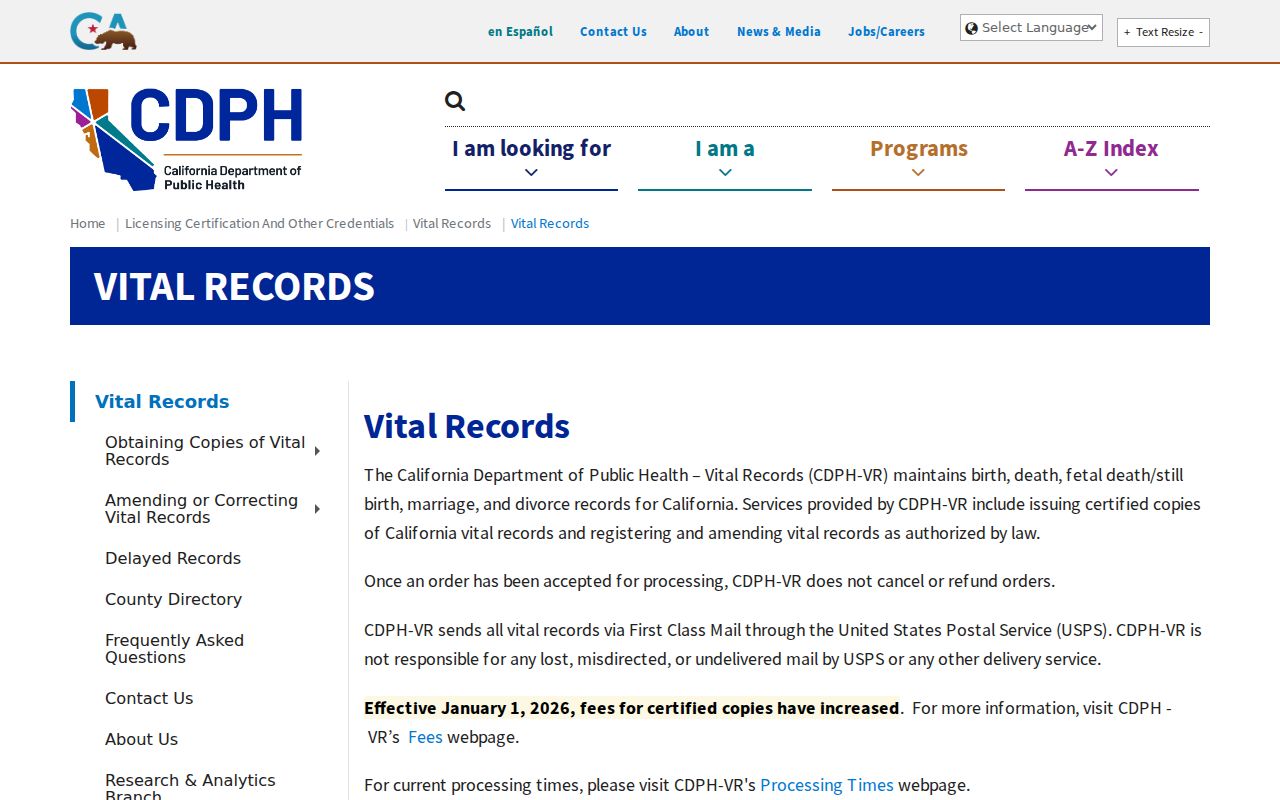
The vital-record image belongs in the endpoint step because a certificate has eligibility rules and is not the same as an open current resident roll.
Imperial Superior Court handles countywide civil, family, probate, and criminal matters for Calexico. The public case-number route differs from the paid Record Searches by Name service. Remote files can require an account, identity verification, and a case token, while adoption, juvenile, mental-health, warrant, and sealed matters remain unavailable through remote access. The courthouse and clerk counter are the fallback when the online view is limited.
The Imperial Superior Court home page supplies the county court service route.
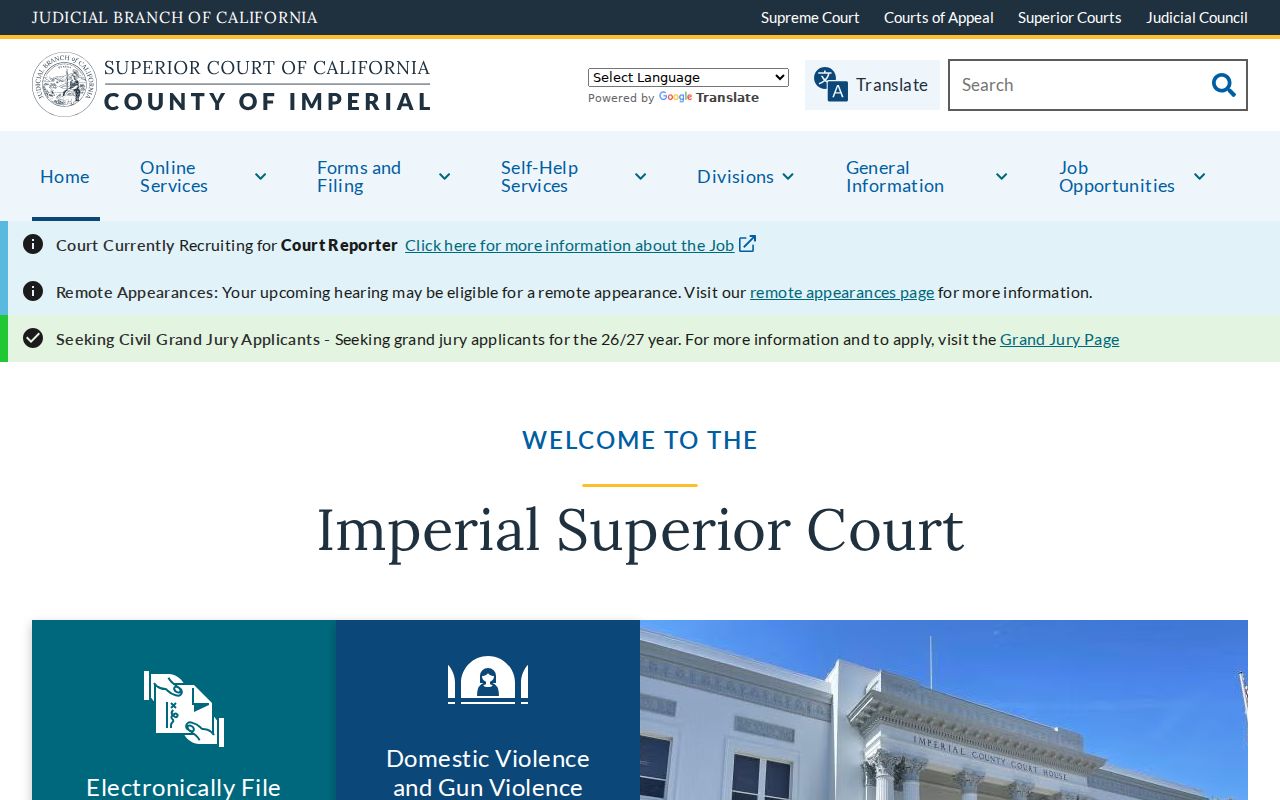
A court image can mark the custodian and access boundary, but a case-party match still needs a name, date, and parcel or family link before it is tied to one person.
Calexico Building Records in Sanborn Maps
Sanborn maps help answer whether a building, street number, block, or use fits the period under study. The verified local research points to 1910 onward, with later years needing confirmation from the official set. Compare the index sheet and detailed sheet, then compare the footprint with a directory entry, Chronicle notice, deed legal description, or permit date. A Sanborn map describes the structure and its use. It does not name ordinary occupants.
Calexico permit and code files can add construction, alteration, inspection, violation, and completion clues, but the exact city archive start and online coverage were not located. Request existing records from the city by address, APN, permit number, project name, and inclusive dates. Ask for the index, application, permit card, inspection history, final inspection, and certificate separately. Keep a permit applicant or contractor separate from the person who lived at the parcel.
The Library of Congress Sanborn collection is the authoritative digitized route identified in the research. Local library or State Library material can fill gaps when a sheet is not online.
Calexico Previous Residents in PACER
A federal case can add a dated party, filing, docket event, counsel, allegation, or judgment when a prior owner or household member appears in a matter that reached the Southern District of California. It is not a substitute for a deed chain or a residence record. Search by party or case, compare the spelling and dates, and treat the result as a legal-context clue. Sealed filings and personal identifiers remain restricted.
The federal court records route is PACER, which requires an account. PACER charges $0.10 per page, caps most individual documents at $3, and waives fees when quarterly charges are $30 or less.
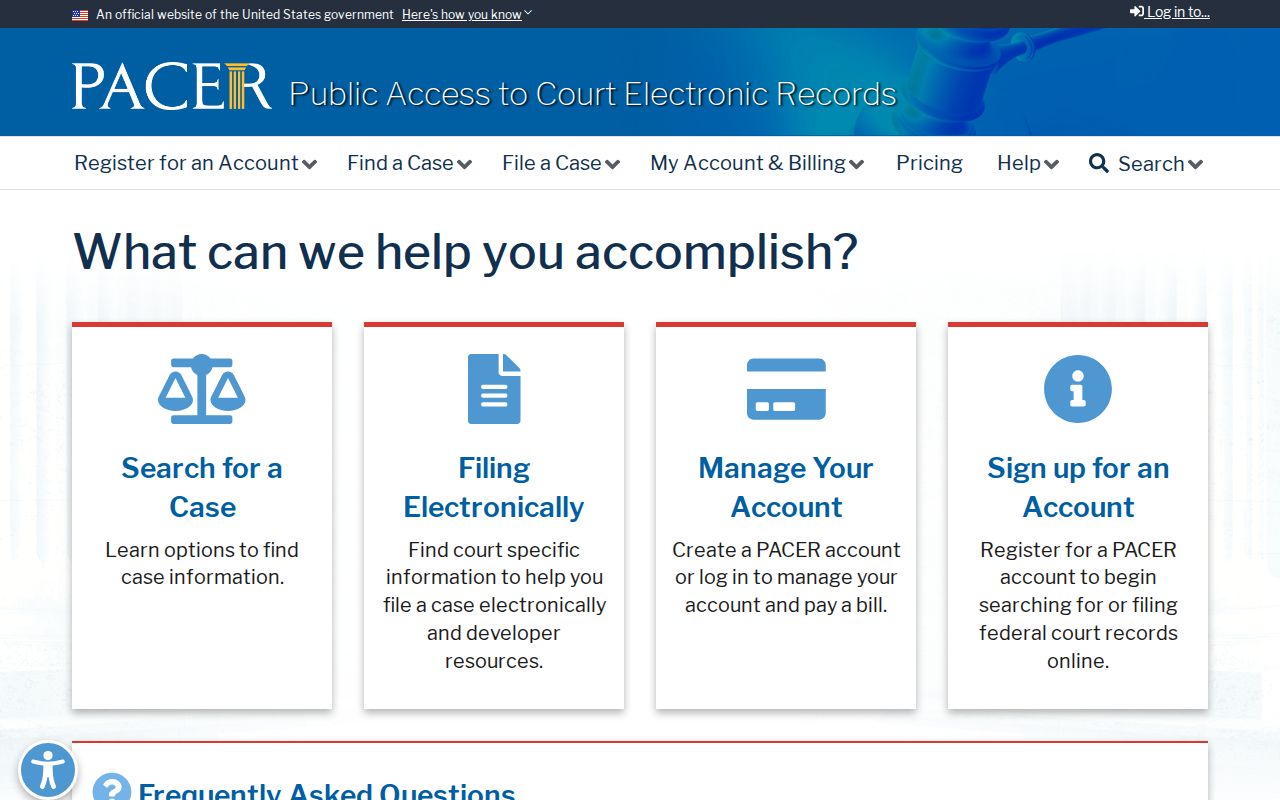
The PACER image illustrates a federal index path that can supplement, but never replace, Imperial County land and household sources.
Calexico Previous Residents: Second PACER Pass
One federal result is easy to overread when a name is common. Run a second search with the alternate surname form, a middle initial, a case number, or a known date. Compare the party role and docket event with the Calexico deed, Chronicle, probate, or census clue. A federal filing may concern a business, a creditor, or a dispute far from the parcel, so the association must be stated narrowly.
Use the same official PACER account and search system for the second pass. Court documents can show a party’s connection to a proceeding, but they do not certify that the person slept at a street address. The Southern District of California is the federal district identified for Imperial County matters.
A separate PACER capture is useful when the research question is about a dated legal endpoint rather than a current household.
Protected Family Trails and Calexico Previous Residents
Some family-history questions have a lawful official route but no open name file. California adoption records are confidential, and birth-parent or adoptee research should use the state’s adoption-information and consent process. Do not try to defeat a sealed file by stitching together private addresses. A certified vital record also has statutory eligibility rules under Health and Safety Code §§102425, 103525-103526. An informational copy is not valid to establish identity.
The official California adoption-information service gives the correct starting point for an adoption-related inquiry.
The adoption image reinforces a key boundary: a protected family trail is not an invitation to bypass confidentiality rules.
Earlier occupants can be identified in a dated directory, census schedule, deed, newspaper, or public court file without being a current contact. The Safe at Home program and confidential-voter rules can also make a legitimate person deliberately absent from address-based sources. Correct an indexing problem with the custodian that created the record, not with a copied search result.
Lawful use. Calexico house-history and family-history research is for personal, lawful purposes. Do not use a past-resident trail to stalk, harass, threaten, impersonate, or track a living person. Public access to a record does not cancel privacy protections or anti-harassment law.
A careful account of who lived at a place before names the source, date, and uncertainty. Owners, recorded parties, occupants, heirs, and relatives are different categories, and the strongest previous-residents conclusion keeps them distinct.