
Calexico Neighbors: Block Sources
A block lookup should begin with the source that matches the question. The Assessor map can show which parcels touch a target. ParcelQuest Lite can return basic property information one APN or address at a time. RecorderWorks can expose recorded parties and instruments tied to an APN after its online cutoff. Elections supplies public precinct geography and aggregate reports, while an authorized voter file has a narrow statutory purpose. Directories and census schedules can show dated households. Community contacts may be public, but membership rosters are not assumed to be open.
| Source | What It Shows About a Block | Access |
|---|---|---|
| Assessor Geo Viewer | Parcel geometry, adjacency, and public map attributes | Free viewer through the Assessor kiosk; exact controls need live inspection |
| ParcelQuest Lite | Basic property data for each parcel, searched by APN or physical address | Online search after terms acceptance; Assessor counter and phone fallback |
| RecorderWorks | Recorded parties and instruments associated with each APN | Free index from January 2, 1986; older office indexes and deed books |
| Precinct maps and results | Political geography and aggregate voting patterns | Imperial County Elections public reports and maps |
| Authorized voter file | Registered-voter data for an approved purpose and defined geography | Elections Code §2194 process; not casual block browsing |
| Directories and census | Dated occupants and households in published years | NARA, library, and genealogy access |
| Community organizations | Published officers or contact points when an organization chooses to post them | No official Calexico association directory located; membership is private |
The table’s sources answer different questions. An owner or recorded party is not automatically a person who lives at the parcel. A mailing address is not the same as a situs address, and a historical household is not a current neighbor. Keep the source, date, and exact relationship in each note.
Map a Calexico Block by Parcel
The safest Calexico neighbor process is a parcel walk. Start with one known address, identify its APN, and widen the map only far enough to see the immediate surrounding polygons. The point is to name the land units around an address, not to claim that a map can reveal every person inside them. Exact buffer, radius, identify, measure, and layer controls were not machine-readable on the kiosk landing page, so map-click browsing is the supported promise.
- Locate the target. Search the physical address or APN in ParcelQuest Lite, then open the Assessor kiosk and Geo Viewer.
- Confirm the polygon. Zoom until the target parcel is clear. Record its APN, situs, legal description if shown, and the street or cross-street context.
- Click adjacent parcels. Select the polygons north, south, east, and west, then check parcels across the street when visible. Record each APN separately.
- Open each parcel record. Use ParcelQuest Lite for basic characteristics and note any mailing-versus-situs difference without treating it as an occupancy answer.
- Check recorded history as needed. Search each APN in RecorderWorks, and move to the Clerk-Recorder counter for the older years.
For a full named-street chain, the Calexico street directory walkthrough adds RecorderWorks, city records, and historical address sources. The block method remains narrower: immediate parcels first, then only the record set needed for the question.
Note: Save each adjacent APN separately; a map’s visual continuity does not mean several lots share one legal parcel.
Across the Street in Calexico’s Geo Viewer
Across-the-street parcels are easy to miss when a search stays inside one address record. In the Geo Viewer, keep the target visible while zooming one level wider. Click the polygon opposite the address, save its APN, and then open the parcel record separately. A street can have irregular lots, alleys, corner parcels, public land, or a boundary that does not follow the apparent row of buildings. The map shows adjacency, not household membership.
Assessor Mapping/GIS is the right contact when a polygon is hard to interpret. The published GIS number is (442) 265-8609. The Imperial County Assessor kiosk is the official entry point for the Front Desk Application and Geo Viewer. Do not promise a one-click radius report or a precise layer list without live verification.
Use the map for orientation, the Assessor for parcel facts, and the Clerk-Recorder for recorded instruments. A good block note says which parcel was clicked, which APN was saved, and which source was used next.
What Calexico Property Records Show
ParcelQuest Lite accepts an APN or physical address and advertises basic characteristics plus a printable or downloadable parcel map. The official description does not advertise an owner-name search. The Assessor’s public record can help connect a parcel, situs, assessed characteristics, and mailing information, but field visibility should be checked in the live county result. The owner mailing address may point to a trust, manager, post-office box, or another place of correspondence.
RecorderWorks adds a different layer. An APN search or a name search can surface deeds, liens, maps, notices, reconveyances, and other instruments from January 2, 1986 forward. A document type can show a proceeding or financing event rather than a completed transfer. Older instruments require the Clerk-Recorder’s office indexes and deed books. The distinction protects a block lookup from turning one legal record into a claim about who lives there.
The Assessor counter is at 940 W. Main Street, Suite 115, El Centro, California 92243. Hours are Monday through Friday from 9 a.m. to 5 p.m. The general line is (442) 265-1300, Mapping/GIS is (442) 265-8609, fax is (442) 265-8030, and assessor@co.imperial.ca.us is the published email. Use the Imperial County ParcelQuest Lite page for the online address or APN start.
Calexico Voter Files Have a Narrow Purpose
California’s My Voter Status service lets a person authenticate their own registration, party preference, ballot status, polling information, and election details. It is not a public search for all Calexico households. Imperial County Elections publishes precinct maps, district materials, past reports, statements of vote, and aggregate results. Those products can describe a block’s political geography without naming a household.
Elections Code §2194 limits voter-file use to political, election, scholarly, journalistic, or governmental purposes defined by law and regulation. An authorized requester must apply through the state or county process, identify the qualifying purpose, state the geography and fields requested, and secure the data. Confidential fields include signatures, full birth dates, driver-license or state-ID information, and partial Social Security numbers. Safe at Home and protected-voter records are excluded from ordinary roster channels.
The official California voter registration rules explain the status link and the limits that matter for a block-level question.
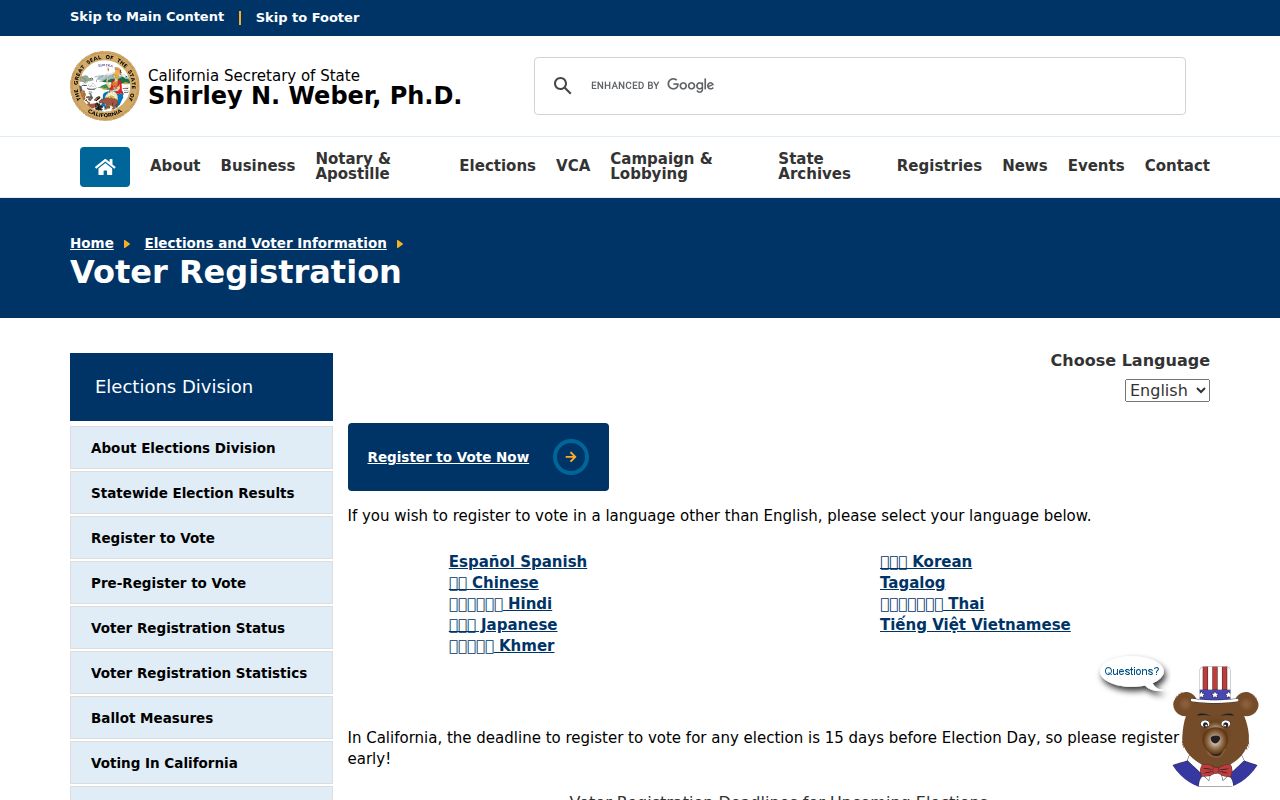
The voter-registration image belongs with the access distinction: a self-check and an authorized file are different from a casual neighborhood roster.
Imperial County Elections is at 940 W. Main Street, Suite 206, El Centro, California 92243-2839. The office is open Monday through Friday from 8 a.m. to 5 p.m. and closed from noon to 1 p.m. The main phone is (442) 265-1060, fax is (442) 265-1062, and TTD is (442) 265-1066. English and Spanish assistance is available.
Historic Calexico Households in Dated Records
Directories and census schedules can show who was recorded near a Calexico address in a past year. NARA verifies Imperial Valley volumes that include Calexico for 1926, 1928, 1930, and 1933. The book covers several communities, so a town marker and a street or geographic section matter. The 1930 census can add household relationships, age, birthplace, occupation, and enumeration clues. A missing name may reflect spelling, a move, a missed canvass, rural delivery, death, or the limits of the publication.
Camarena Memorial Library at 850 Encinas Avenue is the local research desk. Posted hours are Monday through Thursday from noon to 7 p.m. and Friday from 10 a.m. to 6 p.m.; weekends are closed. Call (760) 768-2170 or email library@calexico.ca.gov before a visit. Ask whether Imperial Valley directories, telephone books, Chronicle material, yearbooks, or vertical files are held. The library’s public site does not confirm a holdings-level association or directory roster.
Historical evidence can help explain a block’s past without identifying its present occupants. The NARA directory inventory verifies the four years, while the Camarena Library contact page provides the local access route.
Calexico Community Contacts Without Rosters
No official Calexico neighborhood-association directory was located. City Council districts, school boundaries, irrigation districts, faith congregations, clubs, block watches, and community associations are different layers, and a public officer or contact point does not expose the membership list. Calexico households may have civic ties that never appear in an open record. The Chamber of Commerce can identify businesses and public representatives, but a business-member list is not a resident directory. Do not invent an association name or imply that a group has a public block roster.
| Source contact | Useful block question |
|---|---|
| Assessor Mapping/GIS (442) 265-8609 | How to interpret a parcel polygon, adjacency, map context, or APN connection. |
| Imperial County Elections (442) 265-1060 | One’s own registration, public precinct maps, aggregate reports, and the authorized-file process. |
| Camarena Memorial Library (760) 768-2170 | Whether dated directories, newspapers, yearbooks, or local vertical files are actually held. |
Contact a community organization directly only when its own policy invites a request. A current member list, private phone tree, congregation roster, club list, or block-watch contact sheet is not an open public record merely because the group meets in Calexico.
Note: No official Calexico neighborhood-association directory was located, so public officer contacts must not be expanded into membership claims.
Megan’s Law and Calexico Households
California’s Megan’s Law Website is a regulated registry search, not a directory of the people around a Calexico parcel. Its disclosed information may include a registrant photo or physical description, offense information, and map or address-radius results where the law permits publication. Some registrants are not displayed at a precise address under statutory risk categories. A map result cannot identify the ordinary people living in nearby homes.
Use the official California Megan’s Law search only for its stated public-safety purpose and read the use warnings. Do not copy a map into a mass list or treat a registry match as proof of a current neighbor relationship. A jail booking is also not a conviction, and an agency locator is not a household roll.
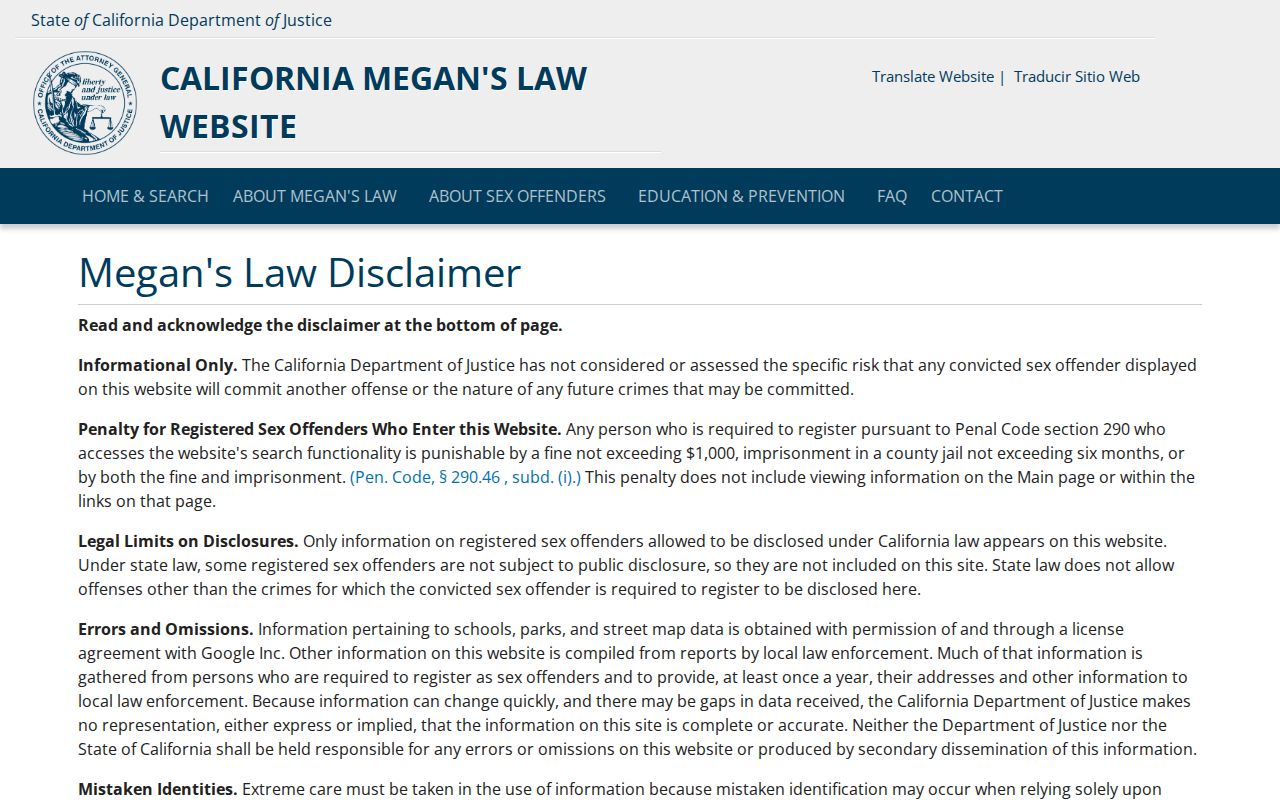
The registry image marks a narrow legal disclosure, not an invitation to identify or publish ordinary Calexico households.
Calexico Privacy Rights for Neighbor Data
California residents have CCPA and CPRA rights that can include requests to know, delete, correct, limit sensitive-information use, and opt out of sale or sharing, subject to exemptions. The California Attorney General explains these rights and complaint routes. Public records still remain at their lawful government source, so a privacy request to a data business does not erase a deed or a county parcel record.
Safe at Home provides an eligible participant with a substitute mailing address, mail forwarding, an agent-for-service role, confidential voter registration, and a path to use the substitute address on certain real-property instruments. It does not delete older public information, and private or federal entities may not be required to accept it. Voter signatures, full birth dates, identity numbers, and protected addresses remain restricted. DMV personal information is also protected under the Driver’s Privacy Protection Act.
The California Attorney General CCPA guidance is the right source for current consumer privacy rights.
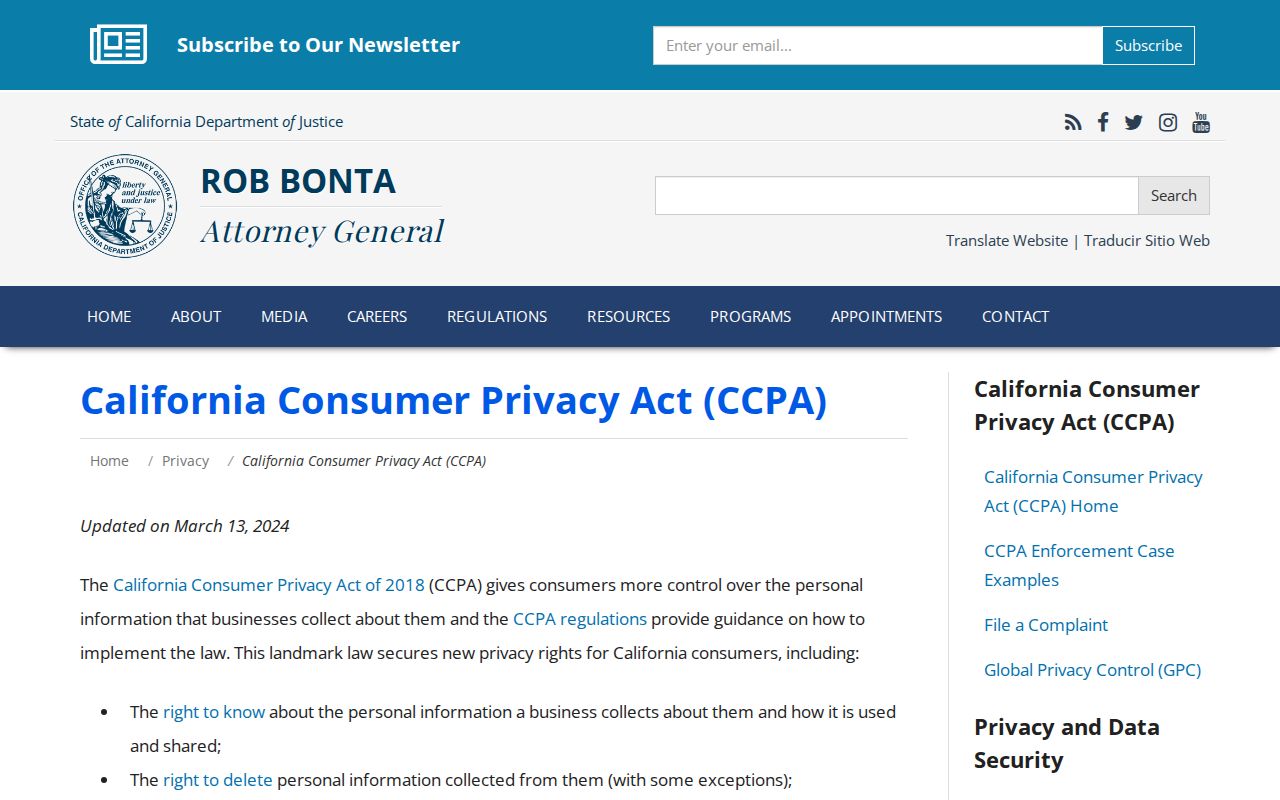
The privacy image supports a practical boundary: a commercial data profile may be corrected or removed under applicable rules, while the public custodian controls its own record.
| Source category | Strength | Limit |
|---|---|---|
| Official parcel and deed records | Custodian-backed land, map, and recorded-instrument evidence | Does not list every household member or prove current occupancy |
| Public election maps and reports | Precinct, district, and aggregate civic geography | Does not name a block’s voters |
| Historical directories and census | Dated household and address snapshots | May omit people, use old numbers, or reflect a multi-city volume |
| Commercial neighbor databases | May combine public and commercial leads in one view | Can be stale, conflate names, and confuse mailing with situs data |
What a Calexico Neighbor Lookup Cannot Show
Even a careful parcel walk cannot reveal every person behind a door. Non-owner occupants, children, guests, utility customers, delivery records, confidential voters, and people using a substitute address are outside the ordinary public parcel trail. The 92231 postal area can extend beyond incorporated Calexico, while 92232 is a post-office-box code and cannot define a residential block. Check city and county jurisdiction in GIS instead of drawing a neighborhood from a mailing label.
Commercial data can be a lead, but an official roll is not automatically complete and a private profile is not automatically accurate. Match names with parcel, date, and source context. If the question is a whole named street, use the address record chain. If it concerns one person, use only the custodian and purpose that fit the record.
Lawful use. Calexico neighbor research is appropriate for personal safety awareness, family history, reconnecting, and civic curiosity. Do not use parcel, voter, registry, or commercial data to stalk, harass, threaten, intimidate, or publish a mass list of living people.
The strongest Calexico block conclusion is modest: these parcels touch, this source shows this recorded relationship, and this dated material places a household here at that time. Anything beyond that needs a new source and a clear lawful reason.