
How Calexico Resident Searches Begin
A solid Calexico residents directory search starts with one known fact. It then works toward a record that backs that fact up. If you hold a street address, the Imperial County Assessor can turn it into an APN, or assessor parcel number. The assessor also supplies a map. The Clerk-Recorder then links that parcel to recorded instruments. Starting with a person instead? The name index, court case search, vital-record rules, and business or license files each answer a different question. Historical research runs through other channels entirely: the Calexico Chronicle, census schedules, and the Imperial Valley directory volumes.
No single roll lists everyone in Calexico. Property data serves land and tax administration. A voter file is restricted. The state status tool exists mainly for checking your own registration. A deed names the parties to one instrument, not every person who uses a building. City directory volumes are snapshots too. A missing name can reflect spelling. It can also point to a move, a missed canvass, or simply the scope of that volume.
- Write down the name, address, date range, and the exact question. Keep the search narrow enough to compare results.
- Use ParcelQuest Lite for an APN or physical address when the trail begins with land. Save the legal description and map context.
- Search RecorderWorks by the recommended surname-first format, then narrow by date, document type, parcel, or map.
- Use court, vital, business, license, or election tools only for the purpose and access level each custodian allows.
- For an older household, pair the four verified directory years with census pages, Chronicle notices, and library or archive help.
Note: A name, address, and date make a stronger lead than a name alone, especially in Calexico’s bilingual records.
Calexico Resident Records Offices
Calexico is not the Imperial County seat. Local files begin with City Hall and its departments. The core county counters sit in El Centro, about 13 miles north, covering recorded documents, assessment and parcel records, elections, vital certificates, and Superior Court files. That split explains a common quirk in any Calexico resident lookup: a person or parcel may surface in a portal labeled Imperial County or El Centro rather than Calexico itself.
Imperial County Clerk-Recorder
940 Main Street, Suite 202
El Centro, CA 92243-2865
(442) 265-1075
Imperial County Assessor
940 W. Main Street, Suite 115
El Centro, CA 92243
(442) 265-1300
Mapping/GIS: (442) 265-8609
Imperial County Elections
940 W. Main Street, Suite 206
El Centro, CA 92243-2839
(442) 265-1060
Imperial Superior Court
Public services for Calexico route through El Centro courthouses.
(760) 482-2200
County records counters are the fallback. Use them when a portal lacks the year or copy you need. The assessor takes walk-in, mail, phone, fax, and email questions during the week. Counter hours run Monday through Friday. At the Clerk-Recorder, index viewing at the counter is free. Copies and mailed orders follow the current fee schedule. A request under the California Public Records Act can reach existing city or county records. This includes records that are not posted online. It cannot force staff to build a new list from scratch, though. So the Calexico records you seek must already exist somewhere.
Note: Route a city permit or code question to Calexico, but route a deed, assessment, court, election, or county certificate question to El Centro.
Calexico Residents: Five-Index Trail
A search that starts with a person works best as a chain of small matches. RecorderWorks may show someone indexed as a party to a deed, lien, map, probate-related instrument, or other document. That result can point to an APN or a legal description. ParcelQuest Lite can then tie the APN to a situs address and parcel map. A court record adds a case number and public filing history. A business entity or professional license adds a public affiliation.
Use two independent attributes beside the name. A middle initial, a spouse or associate in a recorded document, or a consistent city can separate two people who share a name. So can an APN, a license number, an age range, or a repeated business link. Search both halves of a Spanish compound surname. Drop accents when an older database demands it, and try initials or alternate given names. A matching address is an association worth investigating, not proof of a current home.
Calexico Name Records Since 1986
RecorderWorks is the most useful online name index on the Calexico search path. Its public index begins on January 2, 1986. Use the Name mode with LAST, FIRST syntax. The portal accepts a business name. It supports a fraction such as smith, a. It also offers an Allow Partial Match option. The office recommends adding part of a first name, because a broad surname search can time out. Clicking a person's name in the left menu opens a list of tied documents. Those results are sorted by type and recording date.
Beyond names, the index supports several other modes. Document number is one. So are document type with date range, recording date, parcel number, and map modes. A document number begins with a four-digit year. Results expose indexed names, document type, recording date, and sometimes parcel details. Open the document number for detail. Then use the cart or the counter when a copy is needed. Pre-1986 instruments are not absent from county history. Ask at 940 Main Street, Suite 202 for older grantor-grantee books, indexes, book and page references, or a legal-description search.
RecorderWorks can prove a land or legal connection. It cannot turn every indexed party into a resident. A lender, trustee, attorney, beneficiary, heir, lien claimant, or business can appear in the index. None of them need to live anywhere near the Calexico parcel.
The Imperial County RecorderWorks index shows the search modes and the clickable name path used for post-1986 instruments.
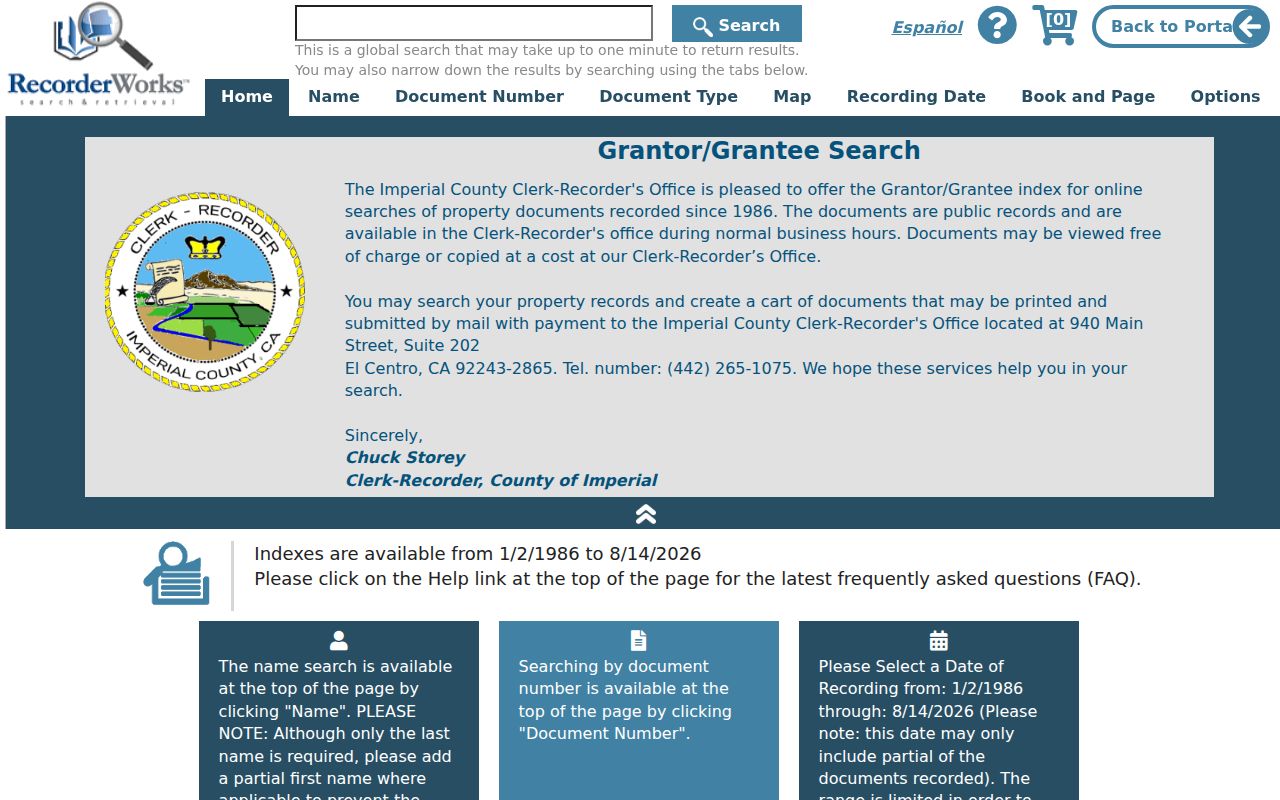
Note: the index view is only a finding aid, so a copy, certification, or older instrument still belongs with the Clerk-Recorder.
| Search field | How it helps |
|---|---|
| Name | Search a person or business with surname-first syntax and optional partial match. |
| Document number | Open a known instrument using the full number and recording year. |
| Document type and dates | Narrow deeds, liens, maps, notices, probate-related instruments, and other filings. |
| Parcel number | Follow instruments tied to an APN when the parcel is known. |
| Map | Search assessor, official, record-of-survey, and other map classes. |
Note: The online RecorderWorks cutoff is a coverage boundary, not a claim that Imperial County land records began in 1986.
What Calexico ParcelQuest Proves
ParcelQuest Lite starts with the physical address or APN. The official Assessor description promises basic property characteristics and a downloadable or printable parcel map. It does not advertise an owner-name input, so begin with a known location rather than expecting a public name directory. Save the APN, situs address, legal or parcel description, and map before moving to a deed search.
Three address facts must stay separate. Situs is where the land sits. A mailing address is where tax correspondence goes and may be a post office box, a manager, a trust, or an out-of-area address. The legal description is the durable land identity used in an instrument. Neither a mailing match nor an assessment result alone proves who sleeps at the property.
Use the Assessor’s kiosk to reach the Geo Viewer. Search or locate the parcel, click its polygon, and note neighboring APNs. The viewer is a navigation aid, not a substitute for the recorder’s instrument or the assessor’s custodian record. Mapping staff can help interpret a map at (442) 265-8609 when a subdivision, split, or boundary is unclear.
To see the source behind a Calexico property search, the Imperial County Assessor’s official page explains the APN and physical-address route. The captured page is a useful reminder that the basic property search is location-led.
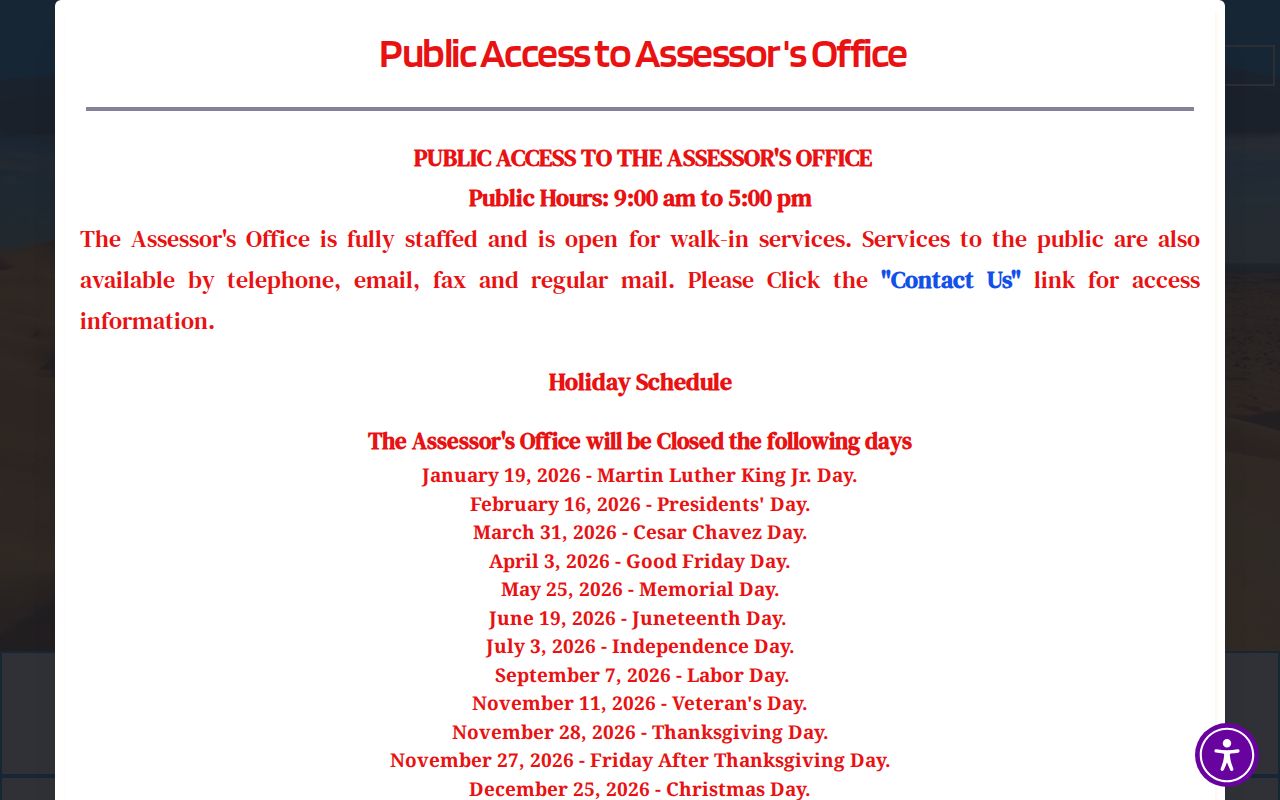
Treat the parcel screen as the first link in a chain. Record its identifier. Then set deeds, maps, permits, and dated directories beside it. No single field works as a household roster.
Calexico Voter Status Is Personal
California's My Voter Status tool lets an individual confirm registration, party preference, ballot status, and election details once they authenticate. It is not a public Calexico street roster. Elections Code section 2194 and 2 CCR sections 19001-19013 restrict voter-file access. The permitted uses are political, election, scholarly, journalistic, or governmental purposes that qualify. A casual hunt for someone else's address falls outside that design.
Imperial County Elections answers a person's own registration questions. It also hands out forms and election reports. Aggregate precinct maps, statements of vote, and district results describe a place without naming a household. Names, residence or mailing addresses, party preference, participation history, signatures, birth dates, and identification numbers each get different handling. Safe at Home and protected-voter rules can pull a legitimate address from a file.
California's 2026 AB 1392 rollout adds default confidentiality for elected officials and candidates unless they opt out. So an empty spot in voter data never proves a person left Calexico. Check your own status through the official tool. Ask Elections about authorized file procedures when a lawful research purpose fits.
For the state tool's interface, the California My Voter Status page is the right starting point. It also shows its access boundary.
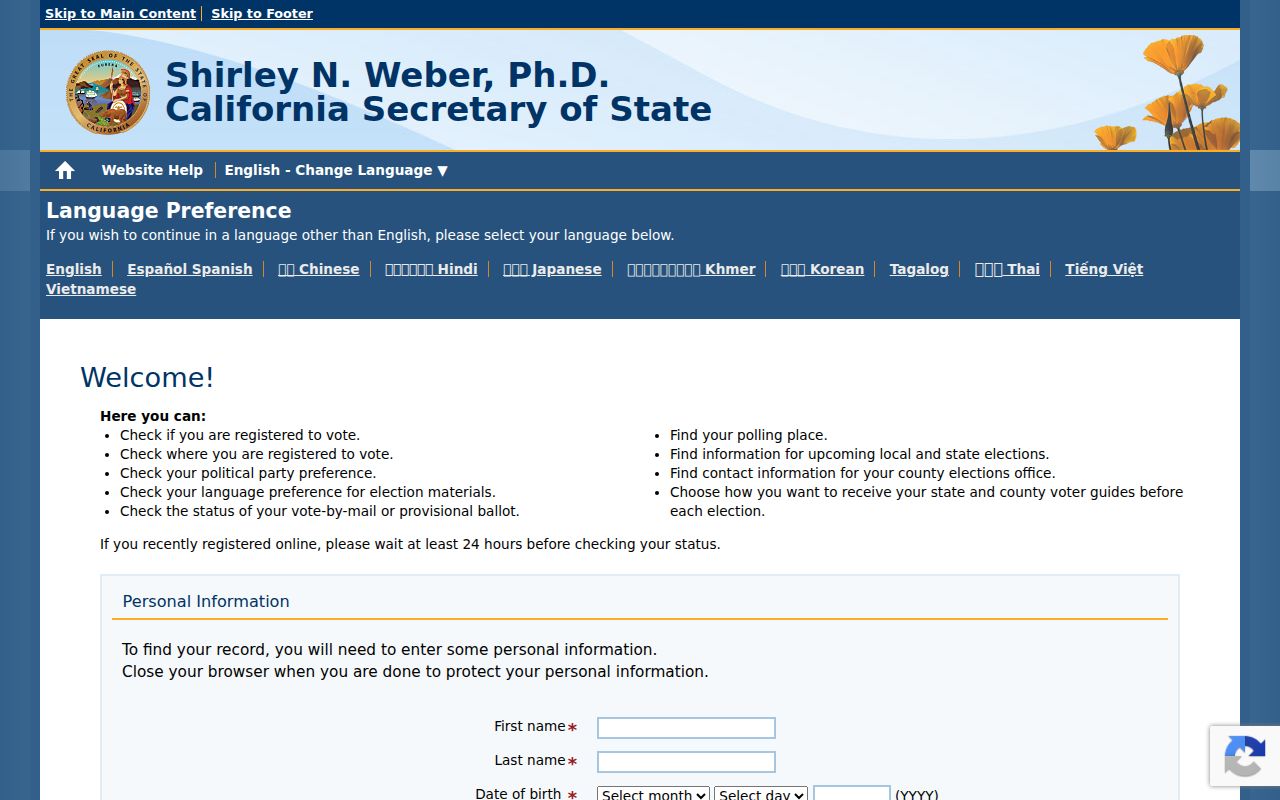
The image presents a self-check workflow, not a searchable roster of Calexico residents. Keep that line clear whenever you compare records. The Safe at Home program explains why an eligible participant may use a substitute address and why older public information does not vanish on its own.
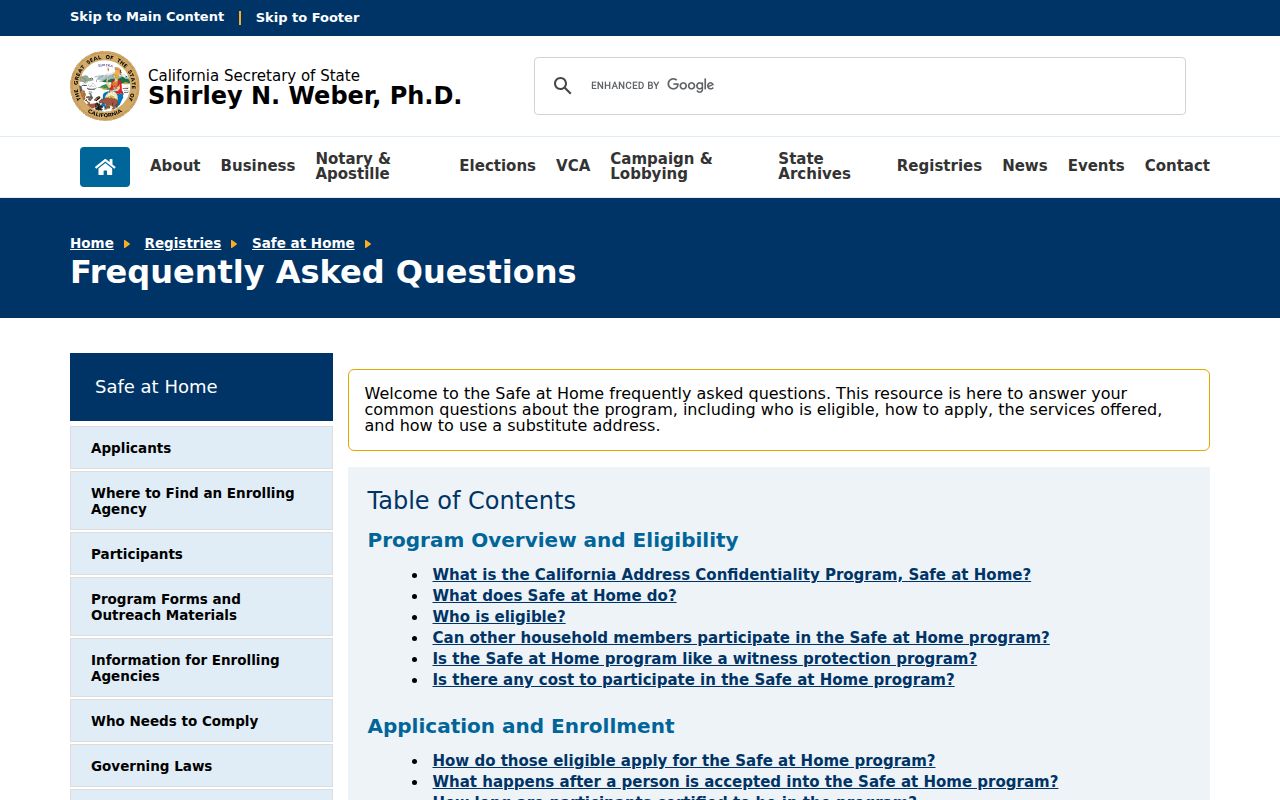
Confidentiality narrows what a lawful search can show. It never turns an absent result into evidence of a move.
Lawful personal use. Public records support family history, civic research, property questions, and reconnecting. Do not use a Calexico record to stalk, harass, threaten, or harm anyone.
Calexico Court Search Has Two Doors
Calexico has no separate city trial court. Imperial Superior Court serves the whole county from El Centro courthouses. Civil, family, and probate matters sit at 939 W. Main Street. Criminal cases run through 650 Wake Avenue. The public portal handles case-number lookup. Record Searches by Name is a separate paid clerk service. The landing page does not expose the current name-search price or year range. Confirm both with the clerk.
Remote access is narrower than a courthouse terminal. A party who wants electronic documents may need an account. The process can also require video identity verification and a case-level token. Adoption, mental-health, juvenile, search-warrant, Ramey-warrant, sealed, and other confidential matters stay outside ordinary remote access. A missing portal result does not mean no case exists.
The court's online-services page lays out the public lookup. It also explains the paid name-search split that shapes any Calexico resident search.
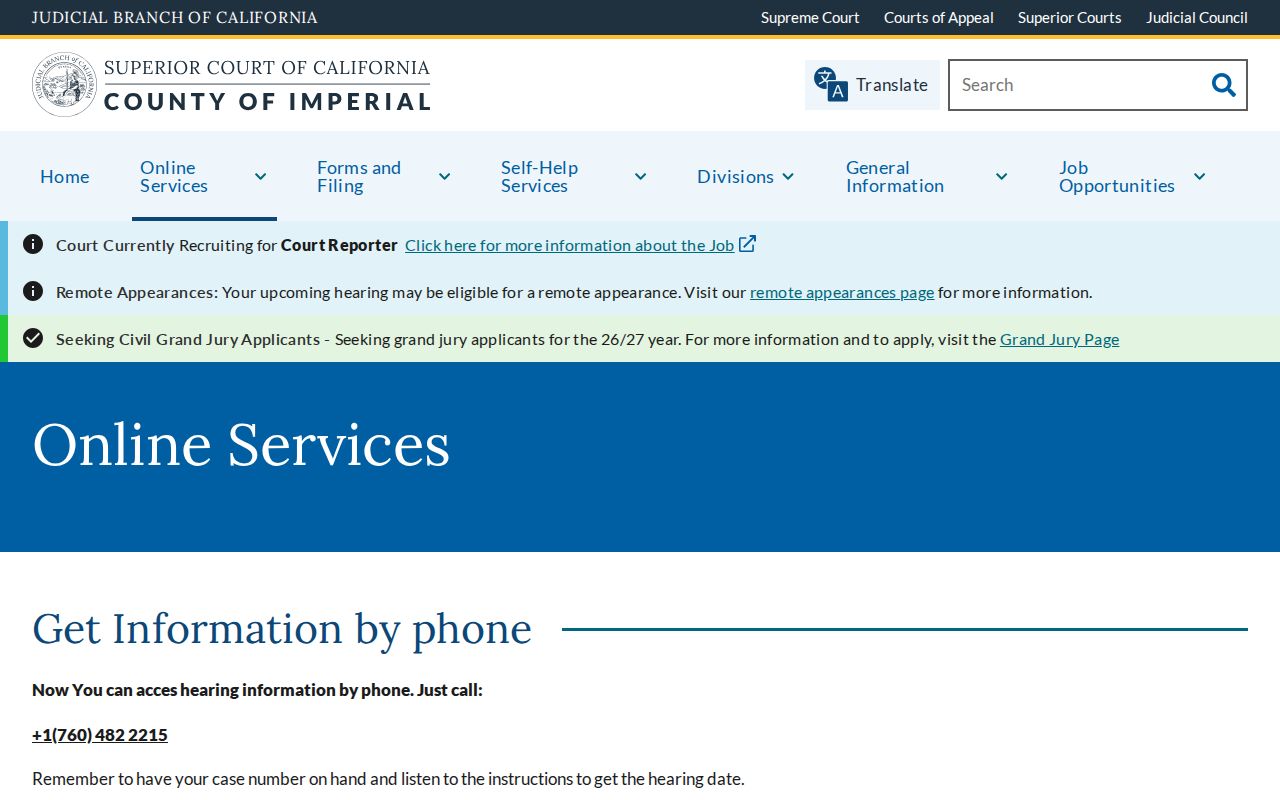
Bring a case number whenever you have one. For a name-only question, ask the clerk about the lawful search route and counter access.
Which Calexico Directory Source Fits
Different Calexico residents directory sources answer different questions. The Assessor leads on parcel identity and assessment evidence. RecorderWorks leads on indexed parties to recorded instruments since 1986. Elections guards a restricted voter file. It also offers a personal status check. City departments hold permit, code, council, contract, and staff records. A court, license, or business search can add a public affiliation. None of them delivers a complete list of households.
| Source | What It Lists | Keeper | Access |
|---|---|---|---|
| ParcelQuest Lite | APN, situs, parcel characteristics and map | Imperial County Assessor | Free basic APN/address route |
| RecorderWorks | Parties to deeds, liens, maps, notices and related instruments | Imperial County Clerk-Recorder | Free index, counter and paid copies |
| My Voter Status | One voter’s registration and election status | California Secretary of State | Authenticated self-lookup |
| City files | Applicants, correspondents, officials and project contacts | Calexico departments | Posted records or CPRA request |
| Chronicle and directories | Dated residents, businesses, notices and community activity | Archives, library and newspaper collections | Search or ask the holding institution |
The right source depends on the question: land, a dated household, an official act, or a public affiliation. Compare dates and roles. Never merge every hit into one profile. A Calexico resident lookup rewards that discipline. The Imperial County Clerk-Recorder portal shows how recorded documents, certificates, marriage services, fictitious business names, and other registrations route through the county office.
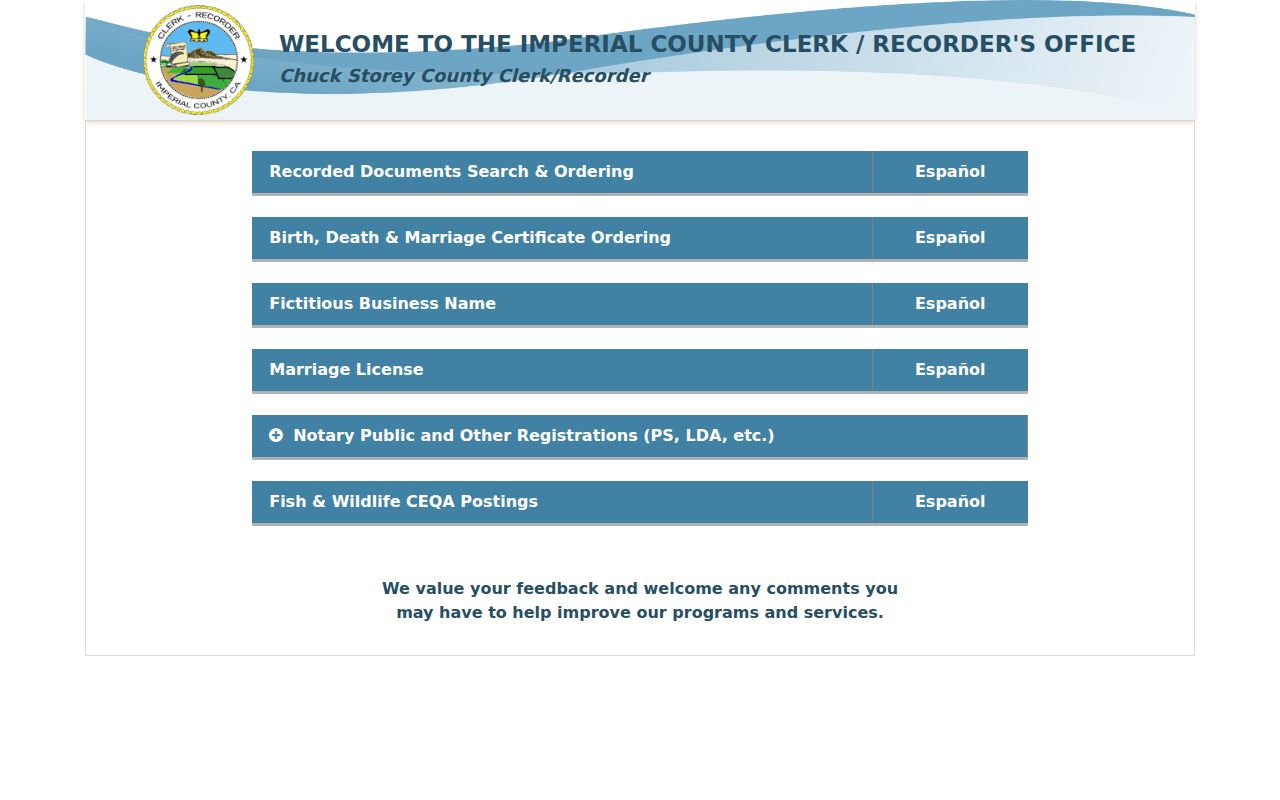
That county gateway separates a record request from a search for a person. The custodian and record type decide the next step.
Calexico Certificates, Indexes, Copies
A vital-records search hinges on one distinction. An index is not a certificate. Imperial County accepts an online application for local birth, death, and marriage documents, but pickup and payment happen in person. The California Department of Public Health runs a statewide certificate route. Both channels apply eligibility rules. The copy issued may be authorized or informational.
Health and Safety Code sections 102425 and 103525-103526 set no simple local rule where births open after one period and deaths after another. Authorized applicants fit statutory categories. Mailed requests can require a sworn statement before a notary. An informational certified copy is marked not valid to establish identity. Genealogy indexes can suggest a name, county, and date, yet they never replace a custodian-issued certificate.
For a divorce, the Superior Court judgment governs. A vital-statistics certificate of record may confirm the reported event without providing the decree. Older family research gains depth from newspapers, church registers, cemetery material, and census schedules as dated evidence.
The county's online vital-order intake shows the boundary clearly.
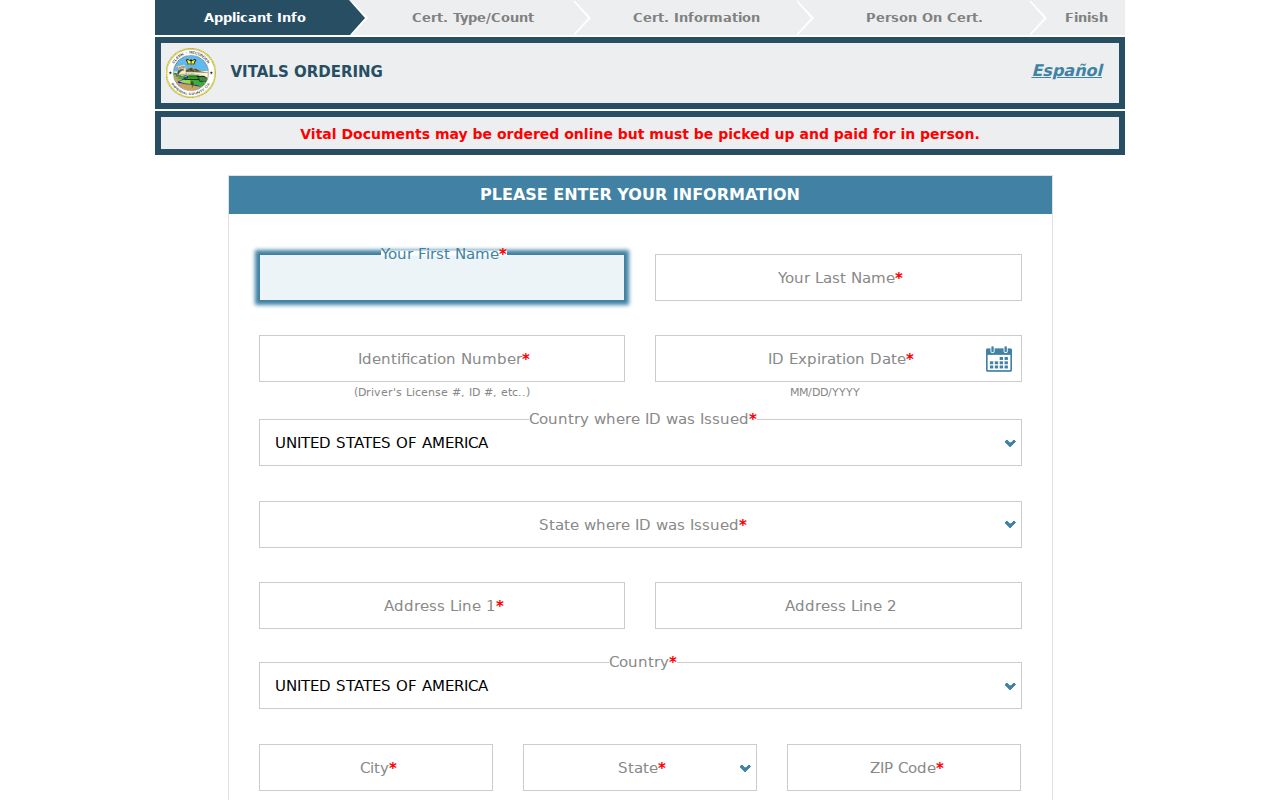
Treat the form as an application start. It is not a promise of online delivery or an open name search for a Calexico residents directory lookup.
Calexico’s Historical Search Desk
Camarena Memorial Library serves as the local research desk for a Calexico residents directory search. That search reaches past current portals. The address is 850 Encinas Avenue, and the contact points are phone (760) 768-2170, fax (760) 357-0404, and library@calexico.ca.gov. Posted hours run Monday through Thursday from noon to 7 p.m. and Friday from 10 a.m. to 6 p.m. Weekend closures apply. The library describes its collections and technology as reflecting Calexico's border community.
No official holdings page confirms a full run of telephone books, criss-cross directories, Chronicle microfilm, yearbooks, obituary clippings, or Ancestry Library Edition. Ask staff to search the catalog and vertical files. Helpful terms include "Imperial Valley city directory," "Calexico telephone directory," "criss-cross directory," "Calexico Chronicle," and a school or yearbook title. When a shelf in Calexico comes up short, the California State Library, NARA, and the local newspaper collection open deeper routes. The Camarena Memorial Library branch page lists the contact details and mission. Those make a pre-visit catalog question worth sending.
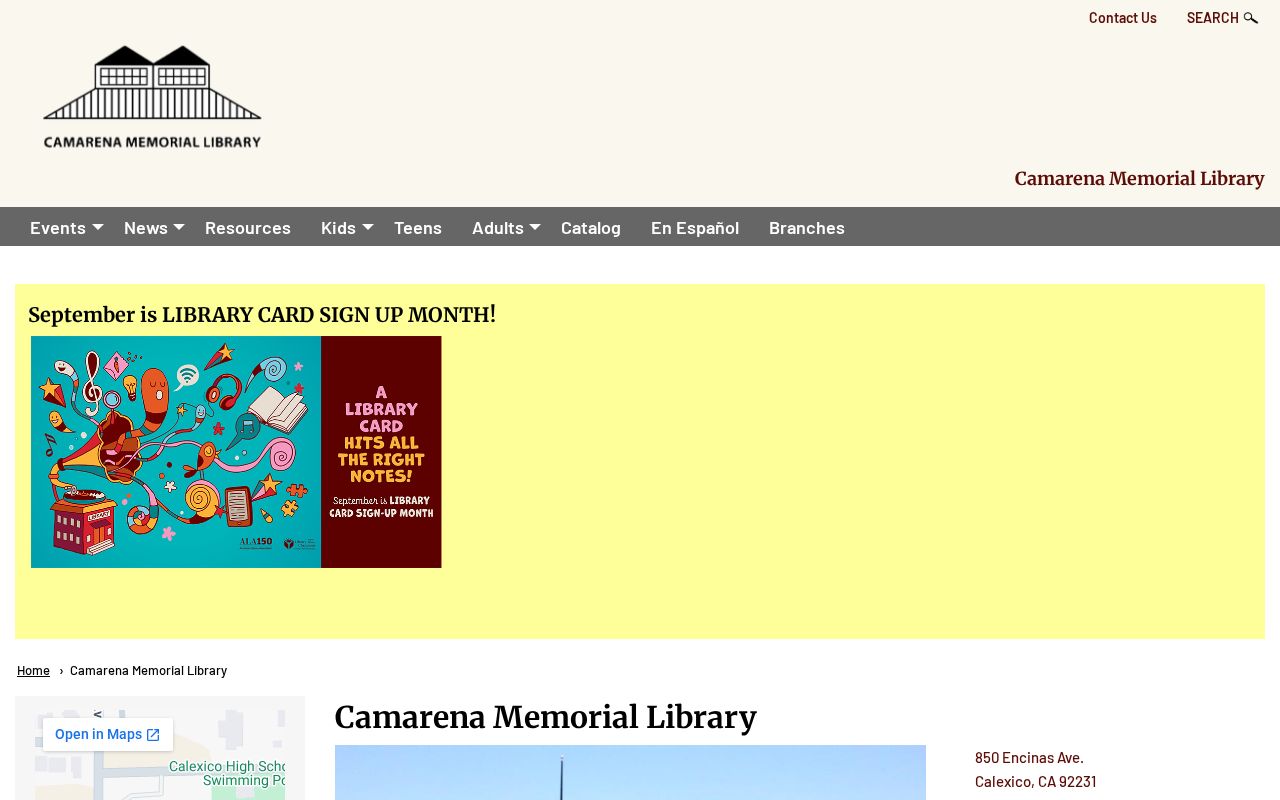
A local librarian can confirm what is actually held. That check beats assuming a generic genealogy collection covers a particular Calexico year.
Note: Ask for the exact title and years before traveling; the research record does not verify a holdings-level directory inventory.
Calexico’s 1926-to-1933 Timeline
NARA verifies four Imperial Valley directory years that include Calexico: 1926, 1928, 1930, and 1933. Ten communities appear in these volumes. Any search must first isolate the Calexico section or town marker. Then compare names across years. The title also carries a buyers' guide and a complete classified business directory. An entry may list a surname, given name, spouse notation, occupation, address, or householder mark. The volume's front matter controls all abbreviations.
The overlap with the 1930 federal census gives researchers a strong correction point. Record the name, address, spouse, occupation, and spelling from the 1928 volume first. Then compare those fields against the 1930 census. Check the 1930 and 1933 directories next for a move, a changed name, or a different town marker. A blank year has many explanations. These include a missed canvass, a rural route, an OCR problem, publication scope, relocation, or death. It never proves on its own that a person was absent from Calexico.
| Snapshot | What to compare | Where to start |
|---|---|---|
| 1926 and 1928 directories | Name spelling, address, spouse, occupation and town marker | NARA or catalog route |
| 1930 directory and census | Household members, age, birthplace, occupation and enumeration clues | NARA directory list and census search |
| 1933 directory | Continuation, move, business listing or changed household notation | Regional directory volume |
For the historical collection itself, the Calexico city directory page follows the volumes and the reading method in greater depth.
Four Calexico Records Terms
Precise wording keeps a Calexico records search honest. A roll is a maintained list kept for a defined administrative purpose. An index is a finding aid, not always the document image itself. A parcel is a mapped unit of land. A criss-cross directory reverses a name list into a street-and-address view, which is how you find who lives on a street in Calexico in older volumes.
- Roll
- A custodian’s list, such as an assessment roll, with a defined purpose and field set.
- Index
- A set of names, dates, numbers, or descriptions that points toward an underlying record.
- Parcel
- A mapped land unit identified by an APN and legal description, which may change after a split or combination.
- Criss-cross directory
- A reverse directory arranged by street or address, when a particular collection includes that section.
These distinctions matter. They explain why a property result, a voter status result, and a historical directory entry should not collapse into one undifferentiated local list.
Calexico Rolls Versus Commercial Leads
Official records and commercial people-finder products serve different purposes. A county record has a custodian, a stated field set, and an access rule. A commercial product may blend public records with other data. It may charge for results, lag on corrections, or confuse people with similar names. For a Calexico lookup it can suggest a lead. But it cannot replace the original records office or archive.
| Question | Official source | Commercial category |
|---|---|---|
| What land is here? | Assessor APN, map, and recorder instrument | May merge stale property data |
| Was a public filing made? | Recorder, court, city, or state custodian | May omit context or date |
| Who appeared in an earlier household? | Directory, census, Chronicle, or library collection | Often lacks page-level proof |
| Can a fact be corrected? | Contact the office that created the record | Correction may not reach the source |
Keep the source URL, record number, date, and page or result label. That trail lets a researcher explain what a Calexico hit actually says and where its limits begin.
When Calexico Online Records End
Every Calexico lookup eventually hits a wall. The 1986 RecorderWorks cutoff is one. So are court remote-access restrictions, voter roll authentication, and uncertain holdings at local counters. The right move is a request, not a guess. Visit the counter that holds the record. Or ask the library to check a catalog or vertical file. A focused California Public Records Act request often works best for an existing record. Name the department and record type. Add the date range and preferred electronic format. Under the act, an agency has ten calendar days to decide whether a request seeks disclosable records, with a possible 14-day written extension for unusual circumstances. The statute does not compel a new database or answers to research questions, so ask for existing records sufficient to show the fact, such as a permit index, a document list, or a dated report.
- Identify the custodian and state the record type, location, and date range.
- Ask for the existing index, log, or file rather than a new list of people.
- Request electronic copies when available and separate the index from a certified copy.
- Record any exemption, redaction, or missing-year explanation for the next archive step.
Note: A focused request for an existing Calexico record is easier to answer than a request asking staff to identify everyone connected to an address.
Historical Calexico Resident Directories
The historical layer of a Calexico residents directory is a dated reconstruction, not a live list. Dates do the anchoring. Imperial Valley volumes survive for 1926, 1928, 1930, and 1933. Census schedules run from 1910 through 1950. The Calexico Chronicle's reported run spans 1904 to 1998, and Sanborn maps plus library vertical files add further context. One boundary matters here. Imperial County was created in 1907 from eastern San Diego County, so a pre-1907 deed or probate chain may belong with a predecessor custodian. That is not a lost Calexico record. Names, addresses, and dates must agree. A directory shows who was listed. A census shows a household at enumeration, and a deed shows a party to a land instrument. A Sanborn sheet gives a building footprint, while a Chronicle notice can bridge a move, a death, or a family connection. Together they build a stronger history. For the full collections workflow, use the Calexico city directory collection guide.